Author: Tim Krabbe
Genre: Cycling/Fiction
“Endurance is not just the ability to bear a hard thing but to turn it into glory.”
-William Barclay
Continuing my tryst with cycles, this week I tend to explore a piece of literature that captures the mental grit and poetic rhythm of competitive sport like cycling. This novel is supposedly a landmark in sports literature and is originally written in Dutch. It was translated in English in 2002. It is a persuasive story of a bicycle race which meditates on obsession, endurance and the fragile boundary between glory and anonymity. Lets find out more about which book I am talking about .
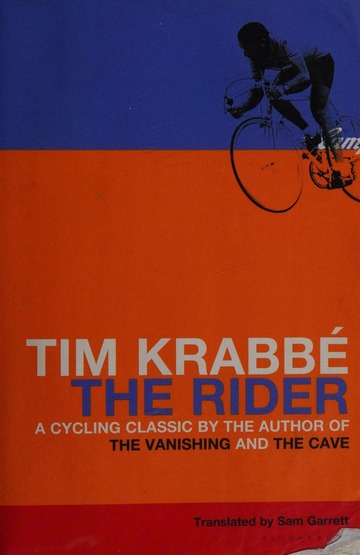
Synopsis: This week I explore The Rider by Tim Krabbe or De Renner as is the original work is known. It follows the story of a cyclist who competes in a race of 137 kilometres(Tour de France I am looking at you). The story is a kilometer by kilometer narration which hooks the reader in the intricate strategies, tolls and mental acrobatics of road racing. The rivals are not just people who are racing with the cyclist but are also characters of a psychological drama unfolding on wheels.
A stream of consciousness insights, recollections of past races, and philosophical reflections is what is offered to the reader as the cyclist is portrayed as a man who is in pursuit of a single mission and that is to win.
Analysis: Why the book is landmark? The book is a landmark because the race is transformed into a canvas for existential rumination . The author not only captures what it feels to race but also what it means to participate in one. He also captures the nitty gritties of the bicycling. The rider has a constant conversation with his body, his competitors and his doubts. This conversation which he has is both intensely personal and universally resonant. It reminds us that every sport is also a form of storytelling. It also puts into highlight stoicism- a philosophy which is designed to make us more resilient, happier , virtuous and wise. It gives out the message that one needs to embrace pain as a form of purification and indirectly becomes an endeavour that demands full commitment. A reality which is applicable both in personal and professional life but very few people embrace it .
The author also critiques the obsession one has in a professional sport. His protagonist is not perfect but a person who is flawed, egoistic and obsessive in nature. The need to win becomes more of a fixation rather than something that is existential in nature. This gives it a realistic feel as it explores the rituals and self-imposed discipline one puts on oneself to achieve something. Discipline is a great way to achieve one’s goals but it inhibits one’s ability to take risks.
The flashbacks are weaved into the story seamlessly as it underlines both the events from the past as well as the future. It highlights both the highs and lows with equal weight showcasing how each adds a layer to the identity of a human being in this case the cyclist. These deepen the narrative and expand the emotional stakes beyond the current race.
Verdict: The Rider is a story which portrays vulnerability, fierceness and a raw narrative of a competitive obsession. The psychological journey it maps is relatable to anyone who has pursued a goal on the brink of exhaustion. The feelings of doubt, determination , joy and pain are universal to everyone who strives. It also reminds us that even if we feel alone in the journey of our pursuit, we are never alone . Our past, our fears and our aspirations they travel with us.
The psychological battles are just as fierce as the physical ones. The protagonist talks to himself, argues with his body, recalls rivals’ past performances, and even contemplates quitting. But quitting, Krabbé seems to argue, is not about failure—it is about surrendering one’s narrative. The need to finish, to matter, to be remembered—these become more important than the podium itself.
It’s also worth noting how the book deals with masculinity—not through bravado, but through vulnerability. The male characters are competitive, yes, but they’re also emotionally porous. There’s a rawness to their interactions and internal reflections that allows the novel to transcend gender norms in sports. It’s a reminder that the desire to prove oneself, to feel alive, is not about toughness but about truth.
So, if you are someone who is looking for a read that is inspiring as well as touches upon the topic of being obsessed. Or if you are someone who wants to delve into the psyche of a person who persists, then this might be a great read for you.
Rating: ****
Cite Bite: “The greater the suffering, the greater the glory.”
In The Rider by Tim Krabbé, what does the race symbolize for the protagonist?
A. A means to achieve financial success
B. A test of physical limits and technical prowess
C. A metaphor for life’s existential struggle and search for meaning
D. A way to impress rivals and secure professional sponsorship

 The Expression Hub
Leave a comment