The month of July is celebrated as Disability Pride Month . It is a month which is dedicated to honoring the experiences, achievements and contributions of people with disabilities. This month-long observance serves as both a celebration of disability culture and identity, and is a powerful reminder of the ongoing fight for equality, accessibility, and inclusion.
Tracing the origin of the month-
Disability Pride Month traces its roots back to July 1990, when the Americans with Disabilities Act was signed into law. This groundbreaking legislation marked a pivotal moment in disability rights history, prohibiting discrimination based on disability and mandating equal access to public accommodations, employment, and services.
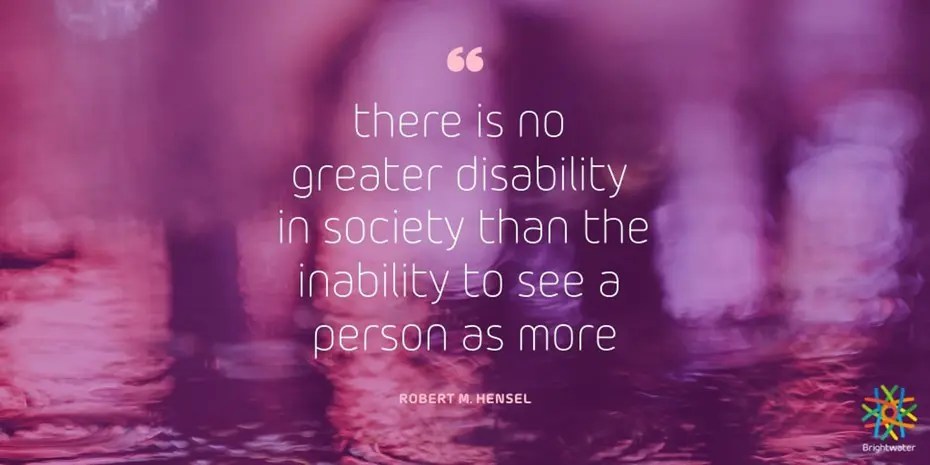
The concept of “pride” in the disability community mirrors other civil rights movements, emphasizing that disability is a natural part of human diversity rather than something to be ashamed of or hidden. It represents a shift from viewing disability through a medical or charity model to embracing it as part of one’s identity and lived experience. This perspective challenges society’s ableist assumptions and promotes the understanding that people with disabilities are not broken or in need of fixing, but rather full participants in society who deserve equal rights and opportunities.
Understanding disability culture and identity-
Disability culture includes everything from disability history and literature to adaptive sports, assistive technology innovations, and unique forms of artistic expression. This culture has developed its own language, customs, and ways of understanding the world that are often invisible to the non-disabled community.
Central to the disability culture is disability pride itself. This pride manifests in various ways: celebrating adaptive techniques and assistive technologies, finding community with other disabled people, and recognizing the unique perspectives that come with navigating the world with a disability. Many disabled individuals speak of the creativity, resilience, and problem-solving skills they’ve developed, viewing these as strengths rather than compensations for deficits.
The disability community is pretty diverse. It includes people with physical disabilities, sensory impairments, intellectual and developmental disabilities, mental health conditions, chronic illnesses, and invisible disabilities. They are united by a single purpose-common struggles against discrimination and barriers to full participation in society.
Importance of representation and visibility-
One of the most crucial aspects of Disability Pride Month is increasing visibility and representation of people with disabilities. As per the World Health Organization, 15% of the population suffers from some kind of disability. These people also remain significantly underrepresented in media, leadership positions, and public discourse.
Positive representation matters because it challenges stereotypes and misconceptions about disability. They either fall into the category of an inspirational figure or are viewed as a villain whose disability is linked to their evil nature. These one-dimensional representations fail to capture the full humanity and complexity of disabled people’s lives.
When people with disabilities see themselves reflected authentically in movies, television, books, and other media, it validates their experiences and shows that their stories matter. For non-disabled people, exposure to diverse disability experiences helps break down barriers and foster understanding.
Accessibility is more than ramps and elevators
Disability Pride Month provides an opportunity to educate the public about accessibility and its importance. While many people think of accessibility in terms of physical accommodations like ramps and elevators, true accessibility encompasses much more. It includes digital accessibility for websites and apps, captioning and sign language interpretation for deaf and hard-of-hearing individuals, audio descriptions for blind and visually impaired people, and cognitive accessibility for those with learning differences or intellectual disabilities.
The concept of universal design demonstrates how accessibility benefits everyone, not just people with disabilities. Despite this , accessibility remains a significant challenge. Many buildings, websites, and services still present barriers to people with disabilities. This ongoing struggle highlights the need for continued advocacy and education about the importance of inclusive design.
Intersecting disability with other aspects of identity
Understanding disability requires recognizing how it intersects with other aspects of identity.These intersections matter because they shape how individuals experience disability and navigate systems of support. Effective disability advocacy and policy must consider these multiple identities and work to address the complex barriers that arise from intersecting forms of discrimination.
The economic impact and employment rights-
One of the most significant challenges facing the disability community is employment discrimination and economic inequality. Despite legal protections, people with disabilities face unemployment rates that are consistently higher than those of non-disabled individual.
The unemployment and underemployment of people with disabilities represents a massive loss of talent and potential for society. When barriers to employment are removed and accommodations are provided, disabled workers often demonstrate exceptional loyalty, creativity, and productivity. Many successful companies have recognized this and have implemented inclusive hiring practices that have benefited their bottom line while advancing disability rights.
Employment rights for people with disabilities go beyond just getting hired. They include the right to reasonable accommodations, equal pay, and advancement opportunities. These rights are protected by law, but enforcement and awareness remain ongoing challenges.
Role of technology in overcoming disability-
Technology has revolutionized the lives of many people with disabilities, providing new opportunities for communication, mobility, learning, and employment.However, technology also presents new challenges. As society becomes increasingly digital, ensuring that new technologies are accessible from the start becomes crucial.
Going beyond physical disabilities-
Disability Pride Month also brings attention to mental health conditions and invisible disabilities, which are often overlooked or stigmatized. Conditions like depression, anxiety, ADHD, autism, chronic pain, and autoimmune disorders may not be immediately apparent to others, but they significantly impact the lives of millions of people.
The stigma surrounding mental health conditions can prevent people from seeking help or disclosing their disabilities when they need support.
Recognizing and supporting invisible disabilities requires a shift in how society thinks about disability. It means understanding that not all disabilities are visible and that people may need different types of support at different times.
Way Forward-
As we celebrate Disability Pride Month, it’s important to remember that the work of creating an inclusive society doesn’t end when July does. True progress requires ongoing commitment from individuals, organizations, and governments to remove barriers, change attitudes, and create opportunities for people with disabilities to fully participate in all aspects of life.
This includes continuing to advocate for stronger accessibility laws and better enforcement of existing ones, supporting disabled-owned businesses and disability-led organizations, and working to change cultural attitudes about disability. It means listening to disabled voices, following disabled leaders, and recognizing that people with disabilities are the experts on their own experiences.
The goal of Disability Pride Month is not just to celebrate how far we’ve come, but to inspire continued action toward a more inclusive future. By embracing disability as part of human diversity and working to remove barriers, we can create a society where everyone has the opportunity to thrive.
Need help creating content?
As a content writer, I’m committed to putting my best foot forward with every project. What drives me most is creating content that truly represents and welcomes everyone—including people with disabilities and marginalized communities.
What I lack in years of experience, I make up for with genuine passion, attention to detail, and a commitment to continuous learning. I’m building my portfolio with purpose, focusing on content that makes a positive impact while helping businesses and organizations connect authentically with their communities.
I believe everyone deserves to see themselves represented in the content they consume, and I’m excited to help create that representation through thoughtful, inclusive writing.
Interested in working with a dedicated new writer who’s eager to help your message reach everyone? I’d love to discuss how we can collaborate to create content that truly makes a difference. Let’s chat about your project and how I can bring fresh energy and perspective to your content needs! I can be reached out here or on Instagram as @theexpressivemind. Also, if you do have any tips or stories to share, feel free to share them in the comments section .

 The Expression Hub
Leave a comment