The air fills with devotional songs. Streets come alive with colorful processions. Millions gather to celebrate Ganesh Chaturthi with unmatched enthusiasm.This is the perfect time to explore Lord Ganesha beyond the festivities. Beyond the modaks and prayers. Beyond the grand celebrations.Let’s venture into the world of literature where the beloved Elephant God takes on new forms, new meanings and new stories.
Ganesha isn’t just the remover of obstacles. He’s the patron of arts and sciences. The lord of intelligence and wisdom. That is the reason why writers invoke him before penning their first words. They seek his blessings for creativity to flow.
As we celebrate his festival, let’s celebrate his literary presence too. Let’s discover how different cultures interpret him. How various genres embrace him.From epic poems to graphic novels. From philosophical treatises to children’s picture books. The Elephant God’s influence spans every corner of literature.His story is our story. His wisdom, our guide. His journey through literature, our exploration of human nature itself.After all, isn’t that what great literature does? It removes obstacles to understanding. It opens new paths of thought.Just like Ganesha himself.
Ganesha in sacred texts
Ganesha’s literary journey begins in the ancient Puranas, where his origin stories are woven with rich narrative detail. The Shiva Purana and Skanda Purana present the most well-known tale of his creation by Goddess Parvati and his subsequent transformation by Lord Shiva.The Ganesha Purana, entirely devoted to the elephant-headed god, serves as a comprehensive literary repository of his adventures, teachings, and divine interventions. Other significant works include the Mudgala Purana and the Brahmavaivarta Purana, which contain extensive Ganesha narratives.
The most significant way Ganesha is invoked or is seen as the divine scribe who penned the Mahabharata as the sage Vyasa dictated it. This meta-literary role positions him not just as a character within stories, but as the archetypal writer himself—making him a natural patron saint for authors and storytellers across cultures.
Mentions in classical poetry and regional literature
The Sanskrit literature has a lot of devotional hymns and scholarly works dedicated to the God. The “Ganesha Sahasranama” presents a thousand names of the deity in poetic form while the Vinayaka Vratakatha” and “Ganesha Kavacham” are other notable Sanskrit compositions that established a rich vocabulary of metaphors and symbols associated with Ganesha that would influence literary traditions across India.
It is not the Sanskrit literature that embraced the elephant-headed God. Regional literature too has its own share of the elephant God. In Marathi literature, saints like Moraya Gosavi and Samartha Ramdas composed devotional poetry that portrayed Ganesha as both cosmic deity and intimate friend. Tukaram’s “Abhanga” poems frequently invoke Ganesha’s blessings. Tamil literature features extensive works dedicated to Pillayar (as Ganesha is known in Tamil), with the “Vinayagar Agaval” by Avvaiyar standing as a masterpiece of devotional poetry. Other significant Tamil works include “Vinayagar Pujavidhi” and numerous compositions by Arunagirinathar in his “Thiruppugazh” collection.
The Bengali literature too in the medieval period saw numerous mangalkavyas (auspicious poems) featuring Ganesha. These narrative poems often depicted the deity’s interventions in human affairs, establishing him as a literary device for divine grace and protection in storytelling. Notable works include “Ganesha Mangal” by various poets and references in Krittibas Ojha’s Bengali “Ramayana”.
The God in modern literature
Modern Indian literature in English has particularly embraced Ganesha as both subject and inspiration. Authors like R.K. Narayan subtly wove Ganesha’s presence into their narratives in works like “The Guide” and “Malgudi Days,” using him as a cultural touchstone that grounds contemporary stories in traditional wisdom. Anita Desai’s works, including “In Custody” and “Clear Light of Day,” often feature the deity as a symbol of cultural continuity in rapidly changing times. Vikram Seth’s “A Suitable Boy” contains memorable references to Ganesha festivals, while authors like Shashi Tharoor have explored mythological themes in books like “The Great Indian Novel.”
In the contemporary global literature
Authors from diverse backgrounds have discovered in Ganesha a universal symbol that transcends specific religious contexts. His representation as the remover of obstacles resonates with readers facing personal, professional, or creative challenges.
Devdutt Pattanaik’s scholarly yet accessible works have revolutionized how contemporary readers understand Ganesha’s mythology. His books “99 Thoughts on Ganesha,” “Ganesha: The Auspicious… The Beginning,” and “7 Secrets of the Goddess” present the deity not just as a religious figure, but as a psychological and philosophical symbol relevant to modern life.
Also writers like Anand Neelakantan have reimagined traditional narratives in works such as “Asura: Tale of the Vanquished” and “The Rise of Sivagami,” presenting mythological stories from alternative perspectives that challenge and enrich conventional interpretations. Ashwin Sanghi’s “The Krishna Key” and Amish Tripathi’s Shiva Trilogy (“The Immortals of Meluha,” “The Secret of the Nagas,” “The Oath of the Vayuputras”) have brought mythological fiction to mainstream audiences, often featuring Ganesha in pivotal roles.
Why the Elephant God is revered in literature?
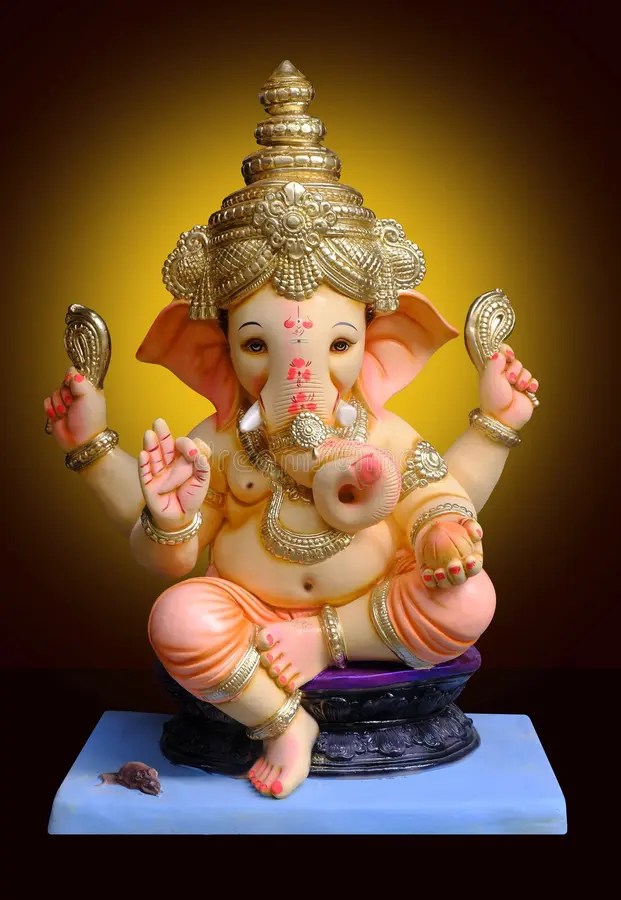
Beyond being a character in stories, Ganesha serves as a powerful metaphor in contemporary literature. His elephant head represents wisdom and memory, his broken tusk symbolizes sacrifice for greater good, and his mouse companion suggests that even the mightiest can be gentle with the smallest.These symbolic elements provide writers with rich metaphorical language for exploring themes of wisdom, sacrifice, humility, and the relationship between power and compassion.
What makes Ganesha’s literary presence so enduring is his fundamental humanity despite his divine status. His stories acknowledge imperfection, growth, and the importance of relationships. Literature featuring Ganesha often explores themes of family dynamics, the balance between duty and desire, and the transformation of obstacles into opportunities.His role as both the creator and remover of obstacles provides writers with a nuanced character who embodies life’s complexities. This duality makes him particularly appealing to contemporary authors exploring themes of ambiguity, moral complexity, and personal growth.
What the elephant god ‘s journey teaches us ?
Ganesha’s journey through literature reflects humanity’s ongoing search for wisdom, compassion, and creative inspiration.The elephant-headed deity’s literary legacy demonstrates how mythological figures can transcend their original contexts to become universal symbols. In an increasingly connected world, Ganesha’s literature serves as a bridge between cultures, generations, and belief systems, proving that great stories—and the deities who inspire them—truly have no boundaries.
Whether as character, inspiration, or metaphor, Ganesha’s presence in literature continues to remind us that every ending can be a new beginning, every obstacle can become an opportunity, and every story has the power to remove barriers between hearts and minds.
Ready to narrate your story?
Just as Ganesha removes obstacles from new endeavors, I help businesses and individuals overcome the challenges of effective communication through compelling content. As a content writer, I specialize in creating engaging blog posts, articles, website copy, and marketing materials that connect with your audience and achieve your goals.
Whether you need:
- Blog posts that establish your expertise and engage your audience
- Website copy that converts visitors into customers
- Marketing content that tells your brand story effectively
- Educational articles that inform and inspire
- Social media content that builds community
I bring the same attention to cultural nuance, storytelling craft, and audience engagement that you’ve just experienced in this article.
Ready to remove the obstacles from your content strategy? Let’s collaborate to create content that not only informs but inspires action. Contact me today to discuss how we can bring your brand’s story to life.
Also, if you find the above article insightful, help others discover the rich literary heritage of Ganesha by sharing this article:
- Share on your social media platforms
- Forward to friends interested in literature and mythology
- Include in your book clubs or literary discussion groups
- Reference in academic or creative projects
- Bookmark for future inspiration
Your sharing helps preserve and spread appreciation for cultural literature while supporting independent content creators. Thank you for being part of this literary journey!

 The Expression Hub
Leave a comment