Starring: James Stewart, Donna Reed, Lionel Barrymore, Thomas Mitchell
, Henry Travers,Beulah Bondi, Frank Faylen
Directed by: Frank Capra
“Through hardwork, perseverance and a faith in God, you can live your dreams.”
-Ben Carson
There’s a classic film that the world has claimed as a Christmas tradition. Every December, it plays on screens around the globe, wrapped in snow and sentiment. The holiday lights twinkle. The music swells. And we’ve all agreed: this is the Christmas movie.
But here’s what most people miss: this film isn’t really about Christmas at all. Yes, it happens to be set during the holidays. Yes, there are festive elements that make it feel seasonal. But strip away the tinsel and the timing, and what you’re left with is something far more universal. This is a story about crisis. About questioning your worth. About standing at a crossroads and wondering if you have the strength to keep going. These moments don’t arrive with a calendar date. They show up unannounced, uninvited, in the middle of ordinary weeks.
That’s exactly why I’m writing about it now, months away from December. Because the message this film carries isn’t seasonal—it’s urgent. Right now, someone needs to hear what this story has to say about second chances. About faith when everything feels dark. About discovering that the life you thought was small might actually be extraordinary. This isn’t holiday content. This is survival content. This is hope content. And it deserves to be watched, discussed, and felt whenever we need it most—not just when the calendar tells us to.
Intrigued? Stick with me. I promise this week’s pick will surprise you—and maybe even change you.
Storyline:
Its a Wonderful Life tells the story of George Bailey. He’s a small-town dreamer stuck in Bedford Falls, running his father’s modest Building and Loan business. He wanted to travel the world. Build skyscrapers. Do something big.
Instead, he’s approving home loans and arguing with the greedy banker Mr. Potter.
Then crisis hits. George faces financial ruin and possible jail time through no fault of his own. On Christmas Eve, standing on a bridge in the snow, he wishes he’d never been born.
Enter Clarence, a bumbling angel who shows George what Bedford Falls would look like without him.
Will George be able to redeem himself or will he take drastic steps and end it all? What are the lessons and realizations that he will This is something that one needs to find out about .
The Scrutiny:
This movie isn’t just a feel-good film with a nice message. It’s a masterclass in storytelling. And once you see how carefully it’s built, you can’t help but be amazed.
The way the story unfolds is absolutely genius. Most movies rush straight to the drama. They throw the main character into chaos in the first twenty minutes and spend the rest fixing it. But this film? It takes its sweet time. It shows us years of the protagonist’s life, one piece at a time. We see the dreams they had to let go. The chances they missed. The tiny disappointments that piled up over the years. So when the crisis finally hits, we don’t just watch it happen—we feel it. We’ve been walking in their shoes the whole time. We understand exactly why they’re breaking down. That’s powerful storytelling. It trusts us enough to care about the slow build, not just the big moment.
The villain is absolutely perfect. Not because he’s evil or over-the-top, but because he’s everything the hero is not. Where the hero is kind, he’s cold. Where the hero gives, he takes. Where the hero cares, he calculates. And here’s the thing—his arguments actually make sense. He offers our hero money, comfort, an easier life. The movie doesn’t pretend that being good is simple. It shows us the real price tag. It forces us to face an uncomfortable truth: doing the right thing costs you something. The villain isn’t just an enemy. He’s a reminder of what life could’ve been if the hero had chosen differently. And that makes the hero’s choice to stay true to themselves even more meaningful.
The ending hits perfectly. Not just because it’s happy, but because it proves something beautiful: your kindness doesn’t disappear. It grows. All those small acts of love? Those times you helped when no one noticed? They weren’t wasted. They were seeds. And the ending shows those seeds blooming in the most unexpected way. In a world where we’re all chasing likes and instant validation, this movie reminds us that real impact takes time. It grows quietly. You might not see it today or tomorrow. But one day, when you need it most, you’ll discover that all those small good things you did? They mattered. People remember. Love returns. Not because you earned it, but because you planted it. It’s an ending that doesn’t just make you smile—it makes you believe again. In goodness. In people. In the quiet power of showing up.
The Sentiment:
There’s a reason this film bombed at the box office in 1946 but somehow became a cultural phenomenon decades later.
We needed time to understand it. And now? We need it more than ever.
Think about the world we’re living in right now. We’re anxious about AI taking our jobs. We scroll through social media and watch everyone else’s highlight reel while sitting in our pajamas at 2 PM. We’re told to monetize every hobby, turn every passion into a side hustle, and build a personal brand or risk becoming irrelevant.
We’re constantly asking ourselves: Am I doing enough? Being enough? Achieving enough?
The pressure is crushing. The comparison is endless. The finish line keeps moving further away.
And into all this noise and chaos, this film leans in close and whispers something we’ve forgotten:
Ordinary goodness is extraordinary.
The main character never goes viral. His small business doesn’t disrupt any industry or make headlines. He never gives a TED Talk about his impact. He doesn’t have a million followers or a blue checkmark. Nobody’s writing think pieces about his innovation.
He just shows up. Day after day. Year after year. Helping people in ways that never trend.
But here’s the beautiful part: when he needed help, his entire town showed up for him. Every single person he’d quietly helped over the years came through his door. Not because he was famous. But because he’d been faithful.
That’s the dream, isn’t it?
Not the viral moment. Not the empire. Not the Forbes list.
The dream is simpler and somehow more profound: to know that our presence mattered. That real people’s lives are genuinely better because we existed. That when we fall, hands reach out to catch us—not because we’re impressive, but because we were kind.
Not because we performed for an audience. But because we cared for actual humans.
Not because we achieved something Instagram-worthy. But because we practiced everyday goodness when nobody was watching.
This film reminds us of something beautiful: the most meaningful impact often happens in the shadows. In quiet conversations over coffee. In showing up when it’s inconvenient. In small acts of generosity that no algorithm will ever track.
And maybe—just maybe—that’s not settling for less.
Maybe that’s actually everything that matters.
Rating: ***
Quote-Unquote: “Strange, isn’t it? Each man’s life touches so many other lives. When he isn’t around he leaves an awful hole, doesn’t he?” (Clarence to George)
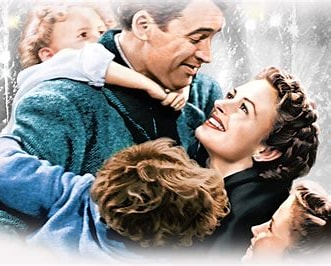
Here’s what I want you to do.
If you’ve never seen It’s a Wonderful Life: Watch it this week. Not as background noise. Really watch it. Let yourself feel George’s desperation. Let yourself be moved by the ending.
If you’ve seen it before: Watch it again, but this time, watch for yourself. Notice which moments hit differently now than they did before. Notice what you’re carrying that George carried.
Then do something radical.
Thank someone who’s been your George Bailey. Call them. Text them. Write them a letter. Tell them specifically how they changed your life with their “small” acts of kindness.
Because here’s what the film teaches us: George spent years not knowing his impact. Don’t let the Georges in your life wonder.
If this post resonated with you, share it.
Not because I need the clicks (though I appreciate them). But because somewhere in your network is someone standing on their own metaphorical bridge.
Someone who feels stuck. Someone who thinks their life is too small to matter. Someone who’s comparing their behind-the-scenes to everyone else’s highlight reel.
They need to hear this message.
Tag someone who needs to watch this movie. Better yet, watch it together. Make it an event. Ugly cry together. Talk about it afterward.
And if you do watch it, come back and tell me: What hit you hardest? What scene wrecked you? What are you seeing differently about your own life?
Let’s start a conversation. Because that’s what George Bailey’s story really is—a conversation about what makes a life truly rich.
Que: What is the name of the town which exists when George is not around?
a. Georgesville
b. Marvel Park
c. Pottersville
d. PotterVilla

 The Expression Hub
Leave a comment