Starring:Vicky Kaushal, Sanya Malhotra, Fatima Sana Sheikh, Govind Namdev, Neeraj Kabi, Mohammed Zeeshan Ayub, Ravindra Vijay
Directed by: Meghna Gulzar
Genre:Biographical/ War drama
“The aim of ethical life is to create a better world for us.”
-Aristotle
Imagine this: It’s wartime, and the entire nation is holding its breath. The Prime Minister herself is asking if the army is ready to strike. And in that charged moment, one man dares to say no. Not out of fear, not out of hesitation, but out of an unwavering commitment to the lives of his soldiers. What kind of person risks everything—career, reputation, the very real possibility of being branded a coward—to insist on proper preparation before sending young men into battle?
In a world where ambition routinely tramples ethics, where integrity often becomes the first casualty of the climb to success, such men seem like relics of a forgotten era.But who exactly was this man who could make a Prime Minister wait, who earned the fierce loyalty of his troops, and whose name still commands respect decades after his service? Why do veterans speak of him with tears in their eyes? What made him different from countless other ambitious officers who passed through the ranks? Read on to find out more.
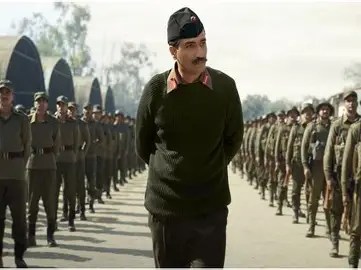
Storyline: Sam Bahadur chronicles the remarkable life of Sam Hormusji Framji Jamshedji Manekshaw, affectionately known as “Sam Bahadur” (meaning “Sam the Brave”). The film spans over four decades of Indian history, from the British Raj through Independence, and culminates in India’s historic victory in the 1971 Indo-Pak war that led to the creation of Bangladesh.
The narrative structure takes us through pivotal moments: Manekshaw’s near-fatal injury during World War II, his strategic brilliance during various military operations, his complicated relationship with political leadership, and ultimately, his masterstroke in the 1971 war.
Scrutiny: The film’s greatest strength lies in its refusal to create a one-dimensional hero. Vicky Kaushal portrays Manekshaw’s multifaceted personality—his famous sense of humor, his ability to speak truth to power, and his deep commitment to his soldiers. The scenes depicting his interactions with then-Prime Minister Indira Gandhi are particularly compelling, showcasing the delicate balance between military authority and political command with great finesse.
Even though Vicky Kaushal does a great job portraying the role of the protagonist but it is the character of Swami that captured the show for me. Swami’s quiet devotion is balanced perfectly with his sharp wit and cheeky remarks, creating moments of genuine humor and warmth throughout the film. The fact that Manekshaw not only tolerated but appreciated Swami’s sarcastic nature speaks volumes about his character—here was a man secure enough in himself to allow those close to him the freedom to speak candidly, even cheekily. These scenes remind us that behind every great leader are countless unsung heroes whose loyalty and dedication form the bedrock of success.
The production design deserves special mention. From the recreation of 1940s Burma to the war rooms of 1971, every frame feels authentic. The costume department’s work in aging Kaushal’s character across decades demonstrates remarkable craftsmanship. The supporting cast, including Sanya Malhotra as Silloo Manekshaw and Fatima Sana Shaikh as Indira Gandhi, deliver nuanced performances that add depth to the narrative.
However, “Sam Bahadur” is not without its flaws. At 150 minutes, the film occasionally feels rushed, trying to compress four decades into a single narrative. Some crucial periods, particularly Manekshaw’s role in the 1962 Indo-China war and the 1965 conflict with Pakistan, receive limited screen time. This rushed pacing sometimes reduces complex military operations to montages, denying audiences the strategic depth that made Manekshaw a military genius.
The film also struggles with balancing its scope. While attempting to cover Manekshaw’s entire career, it sometimes sacrifices emotional depth for historical breadth. His relationship with his family, particularly his wife Silloo, deserved more exploration. The film hints at the sacrifices military families make but never fully delves into this aspect.
From a technical standpoint, some of the battle sequences, while competently executed, lack the visceral impact of recent war films. The 1971 war, which should be the film’s emotional and dramatic climax, feels somewhat underwhelming in its execution. Given the significance of this victory in Indian military history, more immersive and detailed battle sequences would have elevated the film’s impact.
Sentiment: Despite its shortcomings, “Sam Bahadur” succeeds in its primary mission—making a new generation aware of Field Marshal Manekshaw’s contributions to the nation. In today’s times, when military service is often taken for granted and leaders who speak truth to power are rare, Manekshaw’s story feels particularly relevant.
The film evokes a deep sense of pride and gratitude. It reminds us that behind every military victory are leaders who bear tremendous responsibility, make difficult decisions, and often face institutional and political obstacles.
What’s particularly moving is how the film portrays Manekshaw’s relationship with his soldiers. He wasn’t just a commander; he was a leader who understood that soldiers are not mere numbers in a strategy but individuals with families, hopes, and fears. His insistence on proper preparation before the 1971 war, despite political pressure, saved countless lives and ensured a decisive victory.
The film also subtly addresses issues of identity and belonging. As a Parsi in the Indian Army, Manekshaw represented the diverse fabric of India’s military. His success story is a testament to merit-based progression and secular values in India’s armed forces—a message that resonates powerfully in contemporary times.
If I were to encapsulate the essence of “Sam Bahadur” in a single statement, it would be this: “More than a war film, this is a masterclass in leadership, integrity, and the courage to stand by one’s convictions, even when facing the most powerful.”
The film isn’t perfect, but it serves as a valuable cultural artefact. It introduces younger audiences to a hero they should know, celebrates military excellence, and showcases what principled leadership looks like. In an age of instant gratification and viral fame, Sam Manekshaw’s story reminds us that true greatness is built over decades of service, sacrifice, and unwavering commitment to one’s principles.
Call to Action: Honour, Remember, Learn
After watching “Sam Bahadur,” I urge you to take a moment to do the following:
Research and Learn: This film is just the beginning. Dive deeper into Field Marshal Manekshaw’s life. Read his interviews, understand the military strategies he employed, and learn about the 1971 war from multiple perspectives. The film cannot capture everything; your curiosity should lead you further.
Acknowledge Our Armed Forces: The next time you see someone in uniform, take a moment to acknowledge their service. Our military personnel make tremendous sacrifices—time away from family, constant readiness to face danger, and serving in some of the most challenging terrains on Earth. A simple “thank you for your service” costs us nothing but means everything.
Teach the Next Generation: Share stories of military heroes like Sam Manekshaw with young people in your life. In an age dominated by entertainment and social media celebrities, our children need to know about real heroes—people who served something larger than themselves. These stories shape values and inspire character.
Support Veteran Welfare: Look for opportunities to support organizations that work for the welfare of veterans and their families. From education for children of martyrs to healthcare for retired soldiers, there are numerous ways civilians can give back to those who served.
Demand Better Leadership: Finally, let Manekshaw’s example inform what we expect from our leaders—in military, politics, and civil society. Leaders who speak truth, prioritize the welfare of those they lead, and possess both strategic vision and moral courage. Use your voice and your vote to support such leadership.
Share This Story
If this article resonated with you, please consider sharing it with your network. Use the buttons below to share on social media, or send it directly to friends and family who would appreciate learning about Field Marshal Sam Manekshaw.
Let’s ensure that the story of Sam Bahadur reaches as many people as possible. Every share helps introduce someone new to this remarkable leader who shaped India’s military history. In remembering and honoring our heroes, we keep their legacy alive and inspire future generations to serve with the same dedication and integrity.
What are your thoughts on “Sam Bahadur”? Did the film do justice to Field Marshal Manekshaw’s legacy? Share your views in the comments below. Let’s create a conversation about military leadership, historical films, and the heroes we need to remember.
Que: What is the name of Sam Bahadur’s wife?
a. Shahnaz Verma
b. Dilnaz Topewala
c. Siloo Bode
d. Shanaya Shetty

 The Expression Hub
Leave a comment