• Starring: Rani Mukherjee, Supriya Pilgaonkar, Sachin Pilgaonkar, Shivkumar Subramaniam,Neeraj Kabi, Sparsh Khanchandani, Rohit Saraf, Hussain Dalal

    Directed By: Siddharth P Malhotra

    Genre: Comedy drama

    “Let everything you do be done as if it makes a difference”

    -William James

    The Hindi film industry has a reputation for mass-producing films, many of which lack originality or depth. However, every so often, a story emerges from this landscape that truly resonates and strikes a deep chord.Following the recent celebration of Teacher’s Day, this contrast made me think of the real-life heroes who deserve to be celebrated but often go unacknowledged. These are our teachers, the people who dedicate their lives to shaping our future and helping us realise our potential, yet their immense efforts often go unnoticed. This month, let’s honour the people who tirelessly help us carve out a future for ourselves.

    This week talks about a teacher who despite suffering from a setback triumphs over the most daunting obstacles.Who is she, and what battles she has to face ? Read on to find out more.

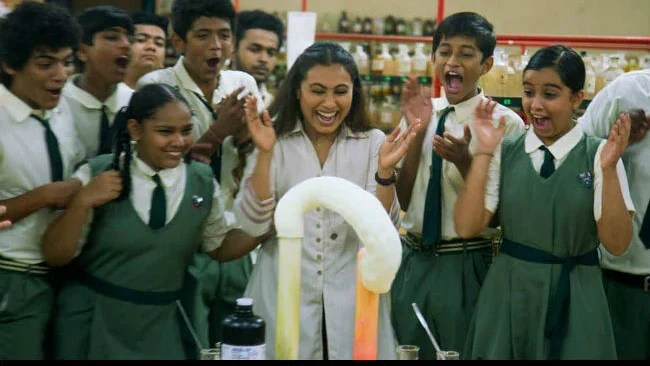
    Storyline: Hichki narrates the story of Naina Mathur, a woman who is suffering from Tourette’s Syndrome.She dreams of becoming a teacher. Despite facing constant rejection due to her condition, which causes involuntary sounds and movements (the “hichki” or hiccups), she never loses hope. When she finally gets an opportunity to teach at an elite school, she’s assigned the most challenging class – a group of underprivileged students from the slums who are part of the school’s Right to Education program.

    What unfolds is a beautiful journey of mutual transformation. While Naina battles societal prejudices about her condition, her students fight against class discrimination and low expectations. Together, they create magic in the most unlikely circumstances, proving that every individual deserves a chance to shine.

    Scrutiny: The movie serves as a powerful commentary on how society treats those who are different. The film doesn’t shy away from showing the harsh reality of discrimination faced by people with disabilities. It also makes an attempt to address the issue of class discrimination, whose potential is overlooked due to their socio-economic background.

    It showcases how both disability and poverty can become barriers to opportunity, while also showing how these barriers can be overcome with the right support and belief.

    It also serves as a critique of the Indian education system. It highlights how schools often fail students who don’t fit the conventional mold, whether due to disability, economic background, or different learning styles. The film advocates for inclusive education and shows how innovative teaching methods can reach students that traditional approaches cannot.

    Rani Mukerji delivers what can arguably be called one of her finest performances to date. Her portrayal of Naina Mathur is both authentic and deeply moving.The way she balances the character’s struggles with her infectious optimism makes for compelling viewing.The film never becomes preachy or melodramatic, maintaining a perfect balance between emotional moments and lighter scenes.

    The cinematography captures both the stark contrast between the privileged and underprivileged worlds and the gradual bridging of that gap.

    Areas which can be improved upon-While emotionally satisfying, the story follows a somewhat predictable trajectory of initial struggle followed by triumph.The film’s resolution is overly optimistic about overcoming systemic issues. If issues could be resolved so easily then maybe every problem should have been solved pretty easily. Also, it highlights its focus on a single classroom which is effective for storytelling, may not fully represent the broader challenges in education.

    The Sentiment: Hichki is a film that succeeds in its primary objective of telling a meaningful story while entertaining its audience. Rani Mukerji’s performance alone makes it worth watching, but the film offers much more. It’s a celebration of the human spirit, a call for inclusivity, and a reminder that our differences can be our strengths.

    The movie works because it doesn’t try to be more than what it is – a simple, heartwarming story about resilience, acceptance, and the transformative power of education. It may not break new cinematic ground, but it certainly touches hearts and minds in equal measure. It is a must watch for anyone interested in stories about overcoming adversity, the power of education, and the importance of seeing beyond surface differences. It’s a film that stays with you long after the credits roll, inspiring you to look at your own “hichkis” as unique aspects of who you are rather than limitations to overcome.

    Rating: *** and 1/2 stars


    Quote-unquote: “Aakhir soch soch ki hi toh baat hai … kyun ki, kyun aur kyun nahi mein bas soch bhar ka hi faasla hai”
    (It’s just a matter of the way one thinks … because only a thought separates, why and why not)


    Que: What is the name of the school which Naina Mathur starts her journey as a teacher?

    a. St. Xaviers

    b. St. Dominica’s

    c. St. Notker’s

    d. St. Basilica


    Watch Hichki here. This supports my content creation at no extra cost to you.


    Did this review help you understand why “Hichki” is such a special film? If you’re looking for engaging, well-researched content like this for your blog, website, or publication, I’m here to help!

    My Content Writing Services Include:

    • Film and entertainment reviews
    • Blog posts and articles
    • Social media content
    • Website copy
    • Product descriptions
    • SEO-optimized content

    I love creating content that not only informs but also engages and inspires your audience. Whether you need regular blog posts, one-time articles, or comprehensive content strategies, let’s work together to tell your story effectively.


    Thank you for reading! If this article resonated with you and sparked a new appreciation for meaningful cinema, I would be grateful if you could share it.

    Every share is a powerful endorsement that helps bring more attention to independent voices and stories that truly matter. By sharing this piece, you’re not just supporting me as a content creator; you’re helping build a community for people who believe that movies can be more than just entertainment.

    Please feel free to share it on your social media, forward it to a friend you know will love it, or simply bookmark it for your next film discussion.

    And, of course, the conversation doesn’t end here. I’d love to hear your thoughts and suggestions. Please let me know in the comments section what topics you’d like me to explore next. Your ideas are what help me create content that truly connects with you.
    Continue reading →: When society’s rejects become each other’s heroes
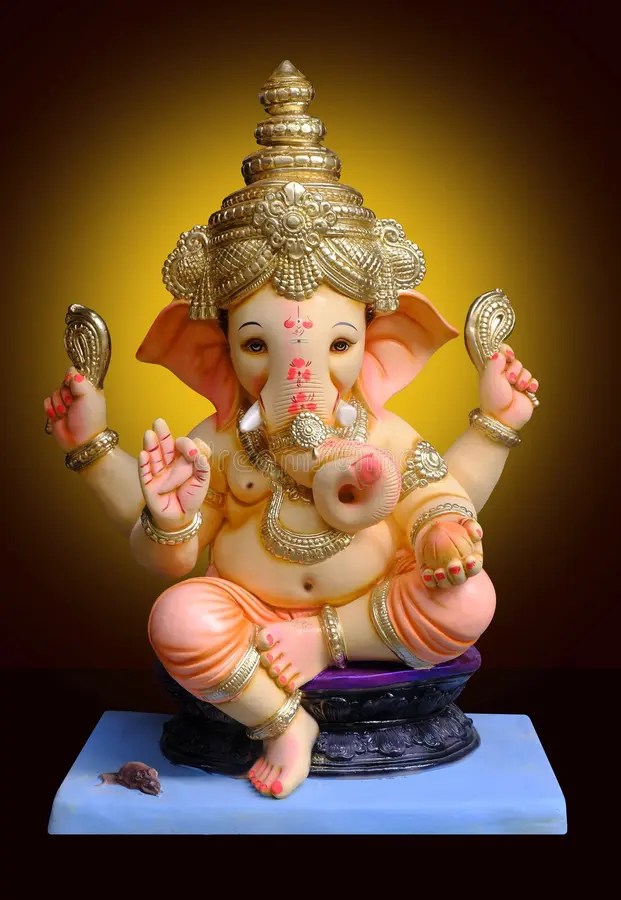
  • The air fills with devotional songs. Streets come alive with colorful processions. Millions gather to celebrate Ganesh Chaturthi with unmatched enthusiasm.This is the perfect time to explore Lord Ganesha beyond the festivities. Beyond the modaks and prayers. Beyond the grand celebrations.Let’s venture into the world of literature where the beloved Elephant God takes on new forms, new meanings and new stories.

    Ganesha isn’t just the remover of obstacles. He’s the patron of arts and sciences. The lord of intelligence and wisdom. That is the reason why writers invoke him before penning their first words. They seek his blessings for creativity to flow.

    As we celebrate his festival, let’s celebrate his literary presence too. Let’s discover how different cultures interpret him. How various genres embrace him.From epic poems to graphic novels. From philosophical treatises to children’s picture books. The Elephant God’s influence spans every corner of literature.His story is our story. His wisdom, our guide. His journey through literature, our exploration of human nature itself.After all, isn’t that what great literature does? It removes obstacles to understanding. It opens new paths of thought.Just like Ganesha himself.

    Ganesha in sacred texts

    Ganesha’s literary journey begins in the ancient Puranas, where his origin stories are woven with rich narrative detail. The Shiva Purana and Skanda Purana present the most well-known tale of his creation by Goddess Parvati and his subsequent transformation by Lord Shiva.The Ganesha Purana, entirely devoted to the elephant-headed god, serves as a comprehensive literary repository of his adventures, teachings, and divine interventions. Other significant works include the Mudgala Purana and the Brahmavaivarta Purana, which contain extensive Ganesha narratives.

    The most significant way Ganesha is invoked or is seen as the divine scribe who penned the Mahabharata as the sage Vyasa dictated it. This meta-literary role positions him not just as a character within stories, but as the archetypal writer himself—making him a natural patron saint for authors and storytellers across cultures.

    Mentions in classical poetry and regional literature

    The Sanskrit literature has a lot of devotional hymns and scholarly works dedicated to the God. The “Ganesha Sahasranama” presents a thousand names of the deity in poetic form while the Vinayaka Vratakatha” and “Ganesha Kavacham” are other notable Sanskrit compositions that established a rich vocabulary of metaphors and symbols associated with Ganesha that would influence literary traditions across India.

    It is not the Sanskrit literature that embraced the elephant-headed God. Regional literature too has its own share of the elephant God. In Marathi literature, saints like Moraya Gosavi and Samartha Ramdas composed devotional poetry that portrayed Ganesha as both cosmic deity and intimate friend. Tukaram’s “Abhanga” poems frequently invoke Ganesha’s blessings. Tamil literature features extensive works dedicated to Pillayar (as Ganesha is known in Tamil), with the “Vinayagar Agaval” by Avvaiyar standing as a masterpiece of devotional poetry. Other significant Tamil works include “Vinayagar Pujavidhi” and numerous compositions by Arunagirinathar in his “Thiruppugazh” collection.

    The Bengali literature too in the medieval period saw numerous mangalkavyas (auspicious poems) featuring Ganesha. These narrative poems often depicted the deity’s interventions in human affairs, establishing him as a literary device for divine grace and protection in storytelling. Notable works include “Ganesha Mangal” by various poets and references in Krittibas Ojha’s Bengali “Ramayana”.

    The God in modern literature

    Modern Indian literature in English has particularly embraced Ganesha as both subject and inspiration. Authors like R.K. Narayan subtly wove Ganesha’s presence into their narratives in works like “The Guide” and “Malgudi Days,” using him as a cultural touchstone that grounds contemporary stories in traditional wisdom. Anita Desai’s works, including “In Custody” and “Clear Light of Day,” often feature the deity as a symbol of cultural continuity in rapidly changing times. Vikram Seth’s “A Suitable Boy” contains memorable references to Ganesha festivals, while authors like Shashi Tharoor have explored mythological themes in books like “The Great Indian Novel.”

    In the contemporary global literature

    Authors from diverse backgrounds have discovered in Ganesha a universal symbol that transcends specific religious contexts. His representation as the remover of obstacles resonates with readers facing personal, professional, or creative challenges.

    Devdutt Pattanaik’s scholarly yet accessible works have revolutionized how contemporary readers understand Ganesha’s mythology. His books “99 Thoughts on Ganesha,” “Ganesha: The Auspicious… The Beginning,” and “7 Secrets of the Goddess” present the deity not just as a religious figure, but as a psychological and philosophical symbol relevant to modern life.

    Also writers like Anand Neelakantan have reimagined traditional narratives in works such as “Asura: Tale of the Vanquished” and “The Rise of Sivagami,” presenting mythological stories from alternative perspectives that challenge and enrich conventional interpretations. Ashwin Sanghi’s “The Krishna Key” and Amish Tripathi’s Shiva Trilogy (“The Immortals of Meluha,” “The Secret of the Nagas,” “The Oath of the Vayuputras”) have brought mythological fiction to mainstream audiences, often featuring Ganesha in pivotal roles.

    Why the Elephant God is revered in literature?

    Beyond being a character in stories, Ganesha serves as a powerful metaphor in contemporary literature. His elephant head represents wisdom and memory, his broken tusk symbolizes sacrifice for greater good, and his mouse companion suggests that even the mightiest can be gentle with the smallest.These symbolic elements provide writers with rich metaphorical language for exploring themes of wisdom, sacrifice, humility, and the relationship between power and compassion.

    What makes Ganesha’s literary presence so enduring is his fundamental humanity despite his divine status. His stories acknowledge imperfection, growth, and the importance of relationships. Literature featuring Ganesha often explores themes of family dynamics, the balance between duty and desire, and the transformation of obstacles into opportunities.His role as both the creator and remover of obstacles provides writers with a nuanced character who embodies life’s complexities. This duality makes him particularly appealing to contemporary authors exploring themes of ambiguity, moral complexity, and personal growth.

    What the elephant god ‘s journey teaches us ?

    Ganesha’s journey through literature reflects humanity’s ongoing search for wisdom, compassion, and creative inspiration.The elephant-headed deity’s literary legacy demonstrates how mythological figures can transcend their original contexts to become universal symbols. In an increasingly connected world, Ganesha’s literature serves as a bridge between cultures, generations, and belief systems, proving that great stories—and the deities who inspire them—truly have no boundaries.

    Whether as character, inspiration, or metaphor, Ganesha’s presence in literature continues to remind us that every ending can be a new beginning, every obstacle can become an opportunity, and every story has the power to remove barriers between hearts and minds.


    Ready to narrate your story?

    Just as Ganesha removes obstacles from new endeavors, I help businesses and individuals overcome the challenges of effective communication through compelling content. As a content writer, I specialize in creating engaging blog posts, articles, website copy, and marketing materials that connect with your audience and achieve your goals.

    Whether you need:

    • Blog posts that establish your expertise and engage your audience
    • Website copy that converts visitors into customers
    • Marketing content that tells your brand story effectively
    • Educational articles that inform and inspire
    • Social media content that builds community

    I bring the same attention to cultural nuance, storytelling craft, and audience engagement that you’ve just experienced in this article.

    Ready to remove the obstacles from your content strategy? Let’s collaborate to create content that not only informs but inspires action. Contact me today to discuss how we can bring your brand’s story to life.


    Also, if you find the above article insightful, help others discover the rich literary heritage of Ganesha by sharing this article:

    • Share on your social media platforms
    • Forward to friends interested in literature and mythology
    • Include in your book clubs or literary discussion groups
    • Reference in academic or creative projects
    • Bookmark for future inspiration

    Your sharing helps preserve and spread appreciation for cultural literature while supporting independent content creators. Thank you for being part of this literary journey!


    Continue reading →: Discovering Ganesha:The Elephant God’s Hidden Literary Legacy
  • Starring: Kangana Ranaut, Ankita Lokhande, Atul Kulkarni,Jisshu Sengupta, Danny Dengzongpa,Vaibhav Tatwavadi, Richard Keep

    Directed by: Kangana Ranaut, Krish Jagarlamudi

    ” A strong woman stands her ground even in the storm.”

    -Anonymous

    India’s journey to freedom, a long and determined journey of seventy-nine years since its independence, began well before the mid-20th century. While the British finally left in 1947, the fight for freedom started much earlier, fueled by growing anger and discontent against the British East India Company. The Company arrived as a seemingly friendly guest but soon showed its true intentions. It wasn’t just there to trade; it was there to take over, draining India of its great wealth and power. This oppressive rule, with its unfair taxes and the destruction of local businesses, ignited a fire of defiance across the entire country. This mounting anger eventually led to a series of rebellions, the biggest and most important being the Revolt of 1857, which is often called India’s First War of Independence.

    This week, we explore a movie which sheds light on one such historical figure. An extraordinary woman who trained herself in fencing, shooting and horsemanship. This was at a time when others of her age were content with learning domestic arts. From the outset, destiny seemed to have marked her for something far beyond the confines of a royal court. She was not just a princess; she was a warrior in waiting. Who was she?Dive deeper to unlock the details.

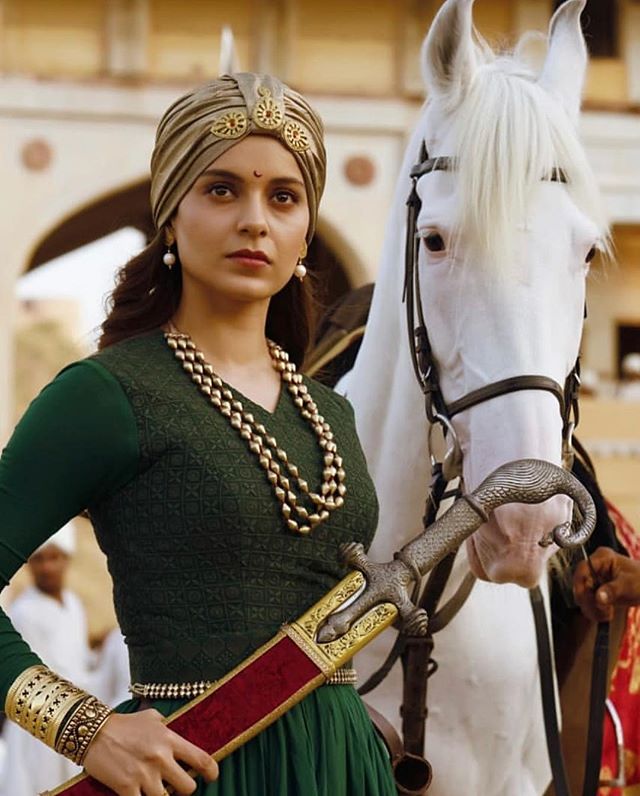
    Storyline: Manikarnika: The Queen of Jhansi(2019) attempts to capture the indomitable spirit of Rani Lakshmibai . It narrates the extraordinary tale of Rani Lakshmibai, the Queen of Jhansi, who led one of the most significant rebellions against the British East India Company during the Indian Rebellion of 1857.

    The film chronicles her transformation from a spirited young woman to a formidable warrior queen who refused to surrender her kingdom under the British Doctrine of Lapse. Like many historical biopics, “Manikarnika” takes certain liberties with historical facts for dramatic effect. While the core events and Lakshmibai’s heroic stand against the British are accurately portrayed, some romantic subplots and character relationships are fictionalized to enhance the emotional quotient.

    The film highlights lesser-known aspects of Lakshmibai’s life, including her progressive views on women’s empowerment and her strategic military acumen. The portrayal of her relationship with her son and her role as a mother adds depth to the character beyond her identity as a warrior.

    Scrutiny: Kangana Ranaut, who also co-directed the film with Radha Krishna Jagarlamudi, delivers a powerhouse performance that anchors the entire narrative. Her portrayal of Rani Lakshmibai is both fierce and nuanced. It captures the queen’s evolution from a loving mother to a strategic military commander.Her dedication to embodying the character physically and emotionally is evident in every frame, particularly during the intense battle sequences.

    The supporting cast provided solid performances that complemented Ranaut’s central role without overshadowing the protagonist’s journey.

    The cinematography effectively contrasts intimate family moments with sweeping battlefield sequences, creating a visual narrative that supports the emotional arc of the story. The production design deserves a special mention as it recreates 19th-century Jhansi with meticulous attention to detail. From the intricate palace interiors to the period-accurate costumes, every visual element contributes to the film’s authentic period feel.

    The film’s action sequences are among its strongest elements. The sword-fighting scenes are well-executed, avoiding the over-the-top theatrics that often plague period action films.

    However, some action sequences suffer from inconsistent pacing and could have benefited from tighter editing. The film’s 148-minute runtime occasionally feels excessive, particularly during certain battle scenes that could have been more concisely presented.

    The Sentiment: “Manikarnika: The Queen of Jhansi” succeeds in its primary mission of bringing one of India’s greatest heroes to the big screen with dignity and respect. While it may not be a perfect film, it serves as an important cinematic document that introduces younger generations to the courage and sacrifice of Rani Lakshmibai.

    Kangana Ranaut’s passionate portrayal and the film’s technical excellence make it worth watching, especially for those interested in Indian history and stories of resistance. The film stands as a tribute to the indomitable spirit of Indian women and serves as a reminder of the price paid for our freedom.

    This is especially important in an era where strong female leadership is more crucial than ever. Rani Lakshmibai’s refusal to bow down to injustice, her strategic thinking, and her ability to inspire others makes her a timeless icon of resistance and empowerment.

    “Manikarnika” reminds us that heroism isn’t just about physical courage—it’s about standing up for principles, protecting those who depend on you, and never surrendering to tyranny, regardless of the odds.

    Rating: *** and 1/2 stars

    Quote-Unquote: “Yeh sar na darr se jhukta hai … na abhimaan se uthta hai … bas aankhon mein aankhen daal swabhimaan se ada rehta hai”


    Did this review help you decide whether to watch Manikarnika?

    If you enjoyed this in-depth analysis and found it valuable, I’d love to help you create similar engaging content for your brand, blog, or business. As a professional content writer, I specialize in:

    ✍️ Movie Reviews & Entertainment Content 📚 Historical & Educational Articles 🎯 SEO-Optimized Blog Posts 📱 Social Media Content 🎬 Script Writing & Creative Content 💼 Brand Storytelling & Marketing Copy

    Ready to elevate your content game? Connect with me here.


    🔄 Share This Article

    Found this review insightful? Help others discover great cinema!

    Share on Social Media:

    • 📘 Share on Facebook
    • 🐦 Tweet this review
    • 📸 Post on Instagram Stories
    • 💼 Share on LinkedIn
    • 📱 Send via WhatsApp

    Your shares help independent content creators like me reach more movie lovers and history enthusiasts. Thank you for your support!


    Have you watched Manikarnika? Share your thoughts in the comments below and let’s discuss what other historical figures deserve the cinematic treatment!

    Continue reading →: A fierce warrior queen

I’m Roshani

Welcome to The Expression Hub! I’m Roshani, who loves to express herself through the medium of writing. This blog is my little corner of the internet where I dive deep into the world of movies, books, and web series—reviewing, analyzing, and sometimes just ranting about the stories that make us laugh, cry, and question everything.

Beyond reviews, you’ll also find my personal musings—random thoughts, life reflections, and the occasional deep dive into the things that inspire me. Think of this as a space where art meets emotion, and where honest opinions matter more than star ratings.

Join me as we explore incredible stories together, one post at a time. Have a recommendation? Let’s talk—I’m always up for discovering something new!

Let’s connect

Design a site like this with WordPress.com
Get started