• The Algorithm of Leadership

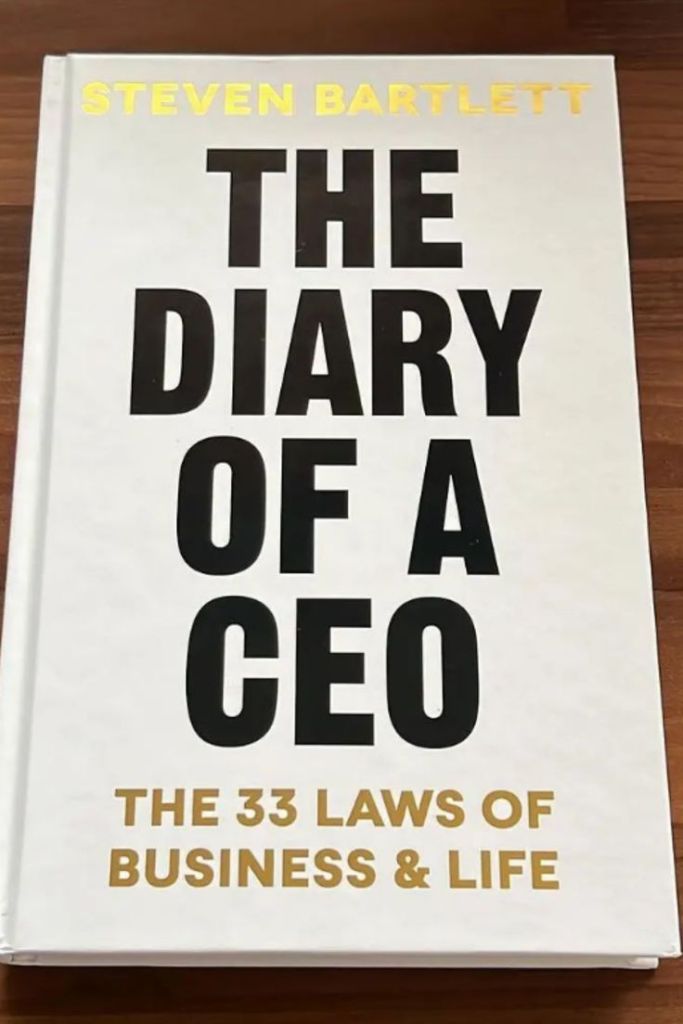
    Author: Steven Bartlett

    Genre: Self-help/Business

    “You brand is what other people say about you when you are not in your room.”

    -Jeff Bezos


    What does it take to be an entrepreneur who is crushing it in business? The ones who seem to have it all figured out, are breaking records and climbing mountains metaphorically? The success stories which we come across LinkedIn, business magazines and the ones which are supposed to inspire millions .What are they made of? Is it just a brilliant idea or hitting the right trend at the right time?

    We often look at the finished product-the huge valuations, the expansion over the globe, the smart marketing. But what we forget is that the journey behind this is always messy and brutal.

    This is what led me to pick up Steven Bartlett’s “The Diary of A CEO”. Because it is easy to admire things from afar, understanding their day-to -day, their thought process, the real triumphs and struggles is where the lessons lie. So, what are these lessons and how can one build not only a business but also a legacy. Let’s take a deep dive.


    Synopsis:

    Unlike other books which gives you recycled wisdom and motivational fluff, The Diary of A CEO cuts through the noise. It tells you the truth about what building a business actually looks like. He doesn’t sugar coat things . Instead he serves up 33 raw, unfiltered laws that governed his journey from a broke university dropout to a successful entrepreneur and investor on Dragons’ Den.

    The book reads like a conversation with that honest friend who will give you straightforward advice of how tough the life of an entrepreneur can be. And this is refreshing in nature. This is because they are not some theories picked from management textbooks . Instead, they come from his own experiences which adds a touch of reality.

    Reading this , helps one realise the straightforward, sometimes uncomfortable, realities of how tough the life of an entrepreneur can truly be. And in a world which obsesses over hyper-optimism and curated perfection, that kind of honesty is welcome. As, it makes one realise that the struggle one undergoes is not to be viewed as a failure, but a pre-requisite for genuine growth.


    Analysis:

    The good partBrutally Honest Insights

    1. The reality check of mental health- The author tries to address the psychological toll entrepreneurship can take on one’s mind. While, others emphasis on a work-life balance, this one digs deep into the anxiety, depression, and identity crises that often accompany building a business. The importance of being boring is a major highlight. In a world where we are bombarded with stories of overnight successes and viral moments, this one principle keeps it real. It might not be social-media worthy but is the truth.
    2. Practical frameworks that work- Some books leave you inspired but clueless about what are the next steps that must be taken. This one, however provides actionable frameworks. For instance, the author insists on hiring people who are willing to learn and unlearn rather than qualifications. Though this is not the reality , but is a pretty practical advice. Also, one needs to demonstrate the mindset shift one requires to build something .
    3. Relationship between success and sacrifice- The author honestly examines what success looks like. Unlike others, he doesn’t glorify the hustle culture nor doesn’t he pretend you can build something working 40-hour weeks. Instead, he tries to portray a fine picture of the the trade-offs involved and helps you decide if they’re worth it for your specific situation.

    The not-so good part: The pitfalls

    1. The survival bias: This is a story of someone who ultimately made it despite the failures and struggles . However, genuine his advice might seem, it does not seem to apply to everyone. The reason being simple: not everyone has the same circumstances or risk tolerance.
    2. Industry-specific insights: Though the core principles of any business remain the same, the execution can differ across various industries.
    3. The paradox of productivity- The productivity methods advocated by the author might be a hindrance to those who have families or other obligations.

    The takeaway-

    The biggest lesson one can take from this book is that it is not a specific strategy or a tactic that grows a business. Rather, its a shift in perspective. Bartlett forces you to confront the reality that building something meaningful requires becoming a different person than you are today. That transformation is uncomfortable, messy, and often painful.


    The Verdict- Should you read this one?

    Though not perfect, “The Diary of a Perfect CEO” is a good read. Read if –

    1. An honest, unfiltered take on entrepreneurship is required.
    2. If you are tired of overtly motivational content.
    3. Need practical frameworks to build and scale a business.
    4. Want to understand the psychological challenges of leadership.

    Avoid it if you-

    1. Prefer step by step tactical guides.
    2. Are looking for industry-specific advice outside of digital/social media
    3. Want a quick read as this takes some time to process.

    This book might not be groundbreaking in nature. However, it has some genuine, practical and refreshingly honest advice of what it takes to build a business. This book succeeds in capturing its readers . Due to the fact, that it doesn’t offer easy solutions or overnight success. Instead, it provides a realistic roadmap for building something meaningful while preserving your sanity.

    And in a world where business gurus make a living by selling dreams which seem fictional, this one offers a realistic picture.

    Whether you are just starting your journey as an entrepreneur or are a person who has experience in running a business and need a perspective, this one will challenge your assumptions and save you from painful mistakes. This comes with a caveat- the journey is not going to be easy.


    Rating: *** and a 1/2 stars

    Cite Bite: “Stop telling yourself you’re not qualified, good enough or worthy. Growth happens when you start doing the things you’re not qualified to do.”


    Want to work together? Let’s create something amazing

    Speaking of honest, authentic content – if you’re tired of cookie-cutter writing that sounds like it came from a content mill, we should talk.

    Why work with me?

    I meet deadlines without reminders, I pay attention to tone and context (not just SEO), I bring research when needed but never let it drown your voice, and most importantly – I genuinely care about the work I do. If I take on your project, I’m all in.

    Every budget deserves great content, so let’s find a solution that works for you. Ready to turn your vision into reality? Let’s chat – I’m always up for a good conversation, especially if it involves books or big ideas!


    Love digging deep into books that matter?

    If this analysis resonated with you, join the community. I deliver honest, no-BS reviews and insights delivered straight to your inbox. I do this for you so that you do not have to suffer or think about picking what your next pick should be.

    Also, the link in the synopsis is an affiliate link. This, in other words means that I earn a small commission if you purchase through them. This doesn’t affect my honest opinion of the book – I only recommend resources I genuinely believe are valuable.

    Found this helpful? If you did find this review helpful, share it with someone who needs to read this book (or needs to hear some hard truths about entrepreneurship). Sometimes the best gift you can give someone is a reality check wrapped in actionable advice.

    Food for thought :The book challenges the idea that you can ‘have it all’ without trade-offs. If you had to choose between rapid business growth and maintaining your current relationships/lifestyle, which would you pick and why? Do tell me about the same in the comments section.

    Continue reading →: The Algorithm of Leadership
  • The billion dollar bubble?

    Genre: Drama/Miniseries/Biographical

    No. of episodes:8

    Presented by: Apple TV+

    “Far and away the best prize that life offers is the chance to work hard at work worth doing.”

    -Theodore Roosevelt

    There are certain business stories, which begin with a whisper of promise . These are the stories which are fuelled by an intoxicating ethos of “fake it till you make it” culture. However, this very spirit can transform into a dangerous illusion of delusion. This not only misleads but fundamentally undermines the very foundations of such businesses. This is because it leads to the creation of an ecosystem which is fabricated in nature. This week’s feature unravels one such gripping narrative. It traces the meteoric rise and precipitous fall of a business idea that promised to revolutionize its industry, only to spectacularly unravel. Journey with me as I dissect where things went wrong and what are the lessons that one can learn as a potential investor or as an innovator.

    Synposis: WeCrashed explores the rapid rise and catastrophic fall of WeWork through the lens of its mysterious co-founder Adam Neumann and his equally ambitious wife Rebekah. The series begins with Adam’s early entrepreneurial ventures which include a baby clothes company and a removable heel which is supposed to be the next ‘big thing in the fashion industry.’ But , in 2010, he dives into creating WeWork alongwith co-founder Miguel McKelvey.

    What starts as a straightforward idea for a co-working space converts into a grand vision. A vision which promises to completely transform the way we live, work and connect. This journey from zero to being a multi-billion dollar enterprise is documented meticulously. It showcases how by being magnetic , Adam and his wife attract investment from major players like Softbank.

    But with explosive growth, a hidden tragedy begins to unfold. This unravels in the form of inflated egos and highly erratic behaviour. The rapid expansion fueled by ambition also leads to intense burning of cash and a long list of personal indulgences.A toxic dynamic is formed as business decisions are not taken on sound business strategy . Instead, they are influenced by personal whims and pseudo-spiritual philosophies which slowly unravels the weight of its unbridled ambition.

    How does this affect the future of the company? Is the so-called future enable to realize its vision or does the future look bleak as growth explodes?Did this pique your curiosity? To uncover the truth,tune into the series and find out. The answers might startle you.

    Assessment: WeCrashed succeeds as both -entertainment as well as a cautionary tale. It functions seamlessly as a business thriller, a character study and a broader commentary on startup culture and late-stage capitalism.

    Jared Leto portrays a character which is complex in nature . A character that genuinely believes in his vision but is disconnected from reality. The protagonist is so charismatic and compelling that it mixes enthusiasm with narcissism. This makes him sympathetic as well as infuriating in nature.

    Anne Hathaway too is portrayed as someone who is responsible for creating an environment where business decisions are taken based on energy readings and mystical insights rather than financial data.

    The attention to detail ingrained in the writing is worth mentioning as it attempts to make terms used in business user-friendly. Though the business part is given importance but it is also given a dash of human touch.

    The series also captures the aesthetic excess of the company perfectly.The production design effectively uses WeWork’s actual spaces and branding to create authenticity while also highlighting the company’s obsession with image over substance.

    The View: WeCrashed operates as a sophisticated examination of interconnected themes that resonate beyond the business world. It serves as a sharp critique of the ecosystem of venture capital ecosystem. It showcases how investors, caught up in the fear of missing out on the next big thing, abandoned traditional due diligence in favor of betting on charismatic founders and growth-at-all-costs mentality. The portrayal of SoftBank’s Masayoshi Son illustrates how even experienced investors can be swept up in the mythology of disruptive innovation.

    More fundamentally, the show explores the dangerous intersection of capitalism and spirituality that characterized the Silicon Valley in 2010. This spiritual capitalism often served as a mask for traditional greed and exploitation.

    The gender dynamics in the series are also well-handled. Rebekah’s character explores her attempts to build her own identity which are portrayed with both empathy and criticism.

    It also functions as a broader meditation on the American Dream and its perversions. It chronicles a tale about what happens when the pursuit of success becomes disconnected from any meaningful values or constraints.

    And most importantly, it highlights how employees, investors, and media all played roles in perpetuating the WeWork myth despite having access to information that should have raised red flags.

    What makes it a compelling watch that it portrays how the company’s culture of relentless positivity and spiritual mission-speak made it difficult for people to voice concerns or acknowledge obvious problems.

    The series succeeds because it is about the systems, incentives, and cultural moments that lead to a rise and fall of a system. It serves as both entertainment and education providing viewers with insights into how modern capitalism operates and how easily vision can become delusion when unchecked by accountability or genuine feedback. It offers valuable lessons about the importance of due diligence, honest leadership, and the dangers of conflating growth with success. Most importantly, it reminds us that behind every business story are real people whose lives are affected by the decisions made in boardrooms and executive suites.

    It serves as a compelling reminder that the most dangerous kind of leadership is often the kind that believes its own hype, and that the line between visionary and delusional can be thinner than we’d like to admit.

    Baap dialogue: “We’re not just a company, we’re a movement. You can’t put a price on consciousness.”

    Rating: ***

    Que: What is the name of the first company Adam starts?

    a. Krawlers

    b. BabyBoom

    c. BabiesCo.

    If this extensive review of WeCrashed appeals to you, you can watch it on Apple TV+, which is available with a subscription. Also, it is available for purchase or rental on major digital platforms like Amazon Prime Video, iTunes, and Google Play.

    The link for the same is available in the synopsis. Clicking on the same may help me earn a small commission.

    Whether you need a compelling blog content, engaging articles for your publication, or thoughtful analysis pieces like this one, I’d love to help bring your ideas to life. I believe great content should be both informative and genuinely engaging—writing that people actually want to read and share. Drop a line here stating your requirements.

    Additionally, if this analysis resonates with you, I would be delighted if you could share it with others who might find it interesting. You can also share your thoughts as they help create meaningful conversations.

    Your shares not only help this content reach people who might enjoy it, but they also support independent content creators like me who pour time and passion into crafting these detailed analyses.

    Continue reading →: The billion dollar bubble?
  • “Leadership is the capacity to translate vision into reality.”

    -Warren Bennis

    The journey of an entrepreneur is often glorified as a path consisting of brilliant ideas and sureshot success. The Internet is filled with stories of how people found success overnight , or how companies rake in a valuation worth billions of dollars and young founders become household names. Yet, every startup— the ones that adorn the covers of business magazines as well as the ones that fade away into obscurity —narrates a story. What is the story or elements that makes up a startup ? Let’s try to explore .

    Market conditions, timing, and resources do play an important role in determining the success of a startup. But apart from these, the most important factor which determines the success of an entrepreneurial venture is the mindset of an entrepreneur. This mindset is not about the motivational mantras or affirmations that we encounter in our day to day life. Rather, it is more about how opportunities are perceived, setbacks processed , decisions made under pressure and how one adapts to the changes in circumstances. This mental framework shapes every decision and reaction of the entrepreneurs.

    It helps to determine whether a customer complaint can be viewed as a feedback or a failure in product launch can be viewed as a learning opportunity and whether a rejection from the target audience is viewed as a sign to start things once again. This psychological mindset helps to understand why some individuals thrive under pressure while others crumble and why certain people persist while others abandon ship.

    Entrepreneurship is becoming critical in today’s times as traditional job security continues to erode and disruptions in technology affect lives. However, a disturbing trend is also observed- most startups fail within the first few years, and even those that survive often struggle to achieve meaningful scale or profitability. Why is this so? This can be attributed to the mental resilience and adaptability entrepreneurs can bring to the challenges that tend to come in their business.

    So, what can one do to attribute to the success of a business they feel can be the next big success story?

    Set the foundation by defining the core values

    Core values are beliefs that form the bedrock of their mindset. Problems are viewed as opportunities. Or market gaps wanting to be filled. This is not mere optimism but reframing of mind to view challenges as optimised solutions. For instance , the founders of Airbnb viewed the 2008 financial crisis as an opportunity for budget-conscious travellers and homeowners needing extra income.This ability to spot opportunity within adversity stems from a fundamental belief that markets are dynamic systems full of unmet needs.

    Another thing that distinguishes an extraordinary entrepreneur is what the psychologists call the “internal locus of control”- the belief that outcomes can be influenced through actions rather than blaming circumstances. Instead of complaining about the lack of funds, strategies are built on how to build the brand or how to attract potential prospects. This helps to face whatever challenges they face in their journey.

    Also, embracing the unknown allows them to move quickly rather than waiting for things to settle or change.

    Embracing the growth mindset

    Entrepreneurs who possess a growth mindset view their abilities, intelligence, and talents as developable through effort and learning. When they encounter failure, they see it as information rather than judgment. The same is explored in Carol Dweck’s book Mindset: The New Psychology Of Success provides deep insights into the same. This thought process helps create a powerful loop that accelerates feedback and improvement. Such entrepreneurs don’t just bounce back from failure but extract the maximum value from it. They conduct thorough post-mortems, analyze what went wrong, identify systemic issues versus one-off problems, and integrate those lessons into their next attempt.

    Entrepreneurs who have growth mindset also handle criticism in a better manner. They understand that criticism, however painful, often contains the seeds of innovation and improvement. Whereas on the other hand, a fixed-mindset entrepreneur might become defensive when customers complain about their product, or struggle with the inevitable failures that come with innovation.

    Ability to take calculated risks

    Entrepreneurs in the popular culture are often viewed as people who take unnecessary risks. But that is not the truth. Entrepreneurs that are successful are strategic risk takers. They view risk as something which can be understood and managed systematically. The minds which are entrepreneurial in nature excel at risk management and mitigation. They think in terms of scenarios or possibilities rather than focusing on direct outcomes. This systematic approach to uncertainty allows them to make bold moves while maintaining some measure of control.

    Successful entrepreneurs understand that a few big wins can more than compensate for multiple small losses. This is why many of them maintain portfolios of experiments and initiatives rather than betting everything on a single venture.

    They also develop models that assess different types of risks. They understand that sometimes the biggest risk is not taking any risk at all, especially in rapidly changing markets where inaction can quickly lead to irrelevance.

    While on the other hand, failed entrepreneurs often fall into two types of risk-traps. First is analysis-paralysis which prevents from taking any decisions. And the other is making impulsive decisions without proper evaluation, confusing boldness with recklessness.

    Cultivating resilience

    Entrepreneurship is cultivating a sense of resilience. The ability to absorb unexpected shocks and continue moving forward is what separates successful entrepreneurs from those who give up when things get difficult.

    Resilient entrepreneurs develop “cognitive flexibility”-the ability to adapt their thinking when faced with new information or changing circumstances. They remain committed to their vision while staying flexible about the path to achieve it. This mental agility allows them to pivot when necessary without losing sight of their ultimate goals.

    This is often built through smaller failures and setbacks that serve as training grounds for larger challenges. The failures are defined as necessary education which seems expensive in the present but is invaluable for future success.

    The most resilient entrepreneurs also develop strong support networks and coping mechanisms. They understand that entrepreneurship can be isolating and mentally demanding, so they proactively build relationships with mentors, peers, and advisors who can provide perspective during difficult times. They also maintain practices—whether exercise, meditation, or hobbies—that help them manage stress and maintain perspective. They also understand the difference between temporary setbacks that require persistence and fundamental problems that require different approaches. This discernment prevents them from stubbornly pursuing failing strategies while maintaining the determination to overcome genuine obstacles.

    Keeping a balance between vision and execution

    The ability to maintain a long-term vision while obsessing over short-term vision is a delicate act. This is where most entrepreneurs fail. While on one side, visionary entrepreneurs can see possibilities others miss but lack of execution makes them people who do not build anything substantial.On the other side, execution-focused entrepreneurs excel at getting things done but may lose sight of the bigger picture.

    Then who is a successful entrepreneur? They are the ones who can work on quarterly goals while keeping their five-year vision in mind. They understand that today’s decisions shape tomorrow’s possibilities.

    Continuous learning

    Entrepreneurs who embrace lifelong learning are the ones that operate with intellectual humility. They admit knowledge gaps and systematically fill them. They understand that confidence in their ability to figure things out trumps confidence in having already figured everything out.This intellectual curiosity creates innovative approaches that purely industry-focused thinking cannot achieve.

    Where do things go wrong then?

    Despite good intentions and solid ideas, many entrepreneurs fall victim to predictable mental traps that sabotage their success. This includes the following-

    1. The ego trap- Entrepreneurs become so emotionally invested in their ideas that they cannot accept market feedback or adapt to changing conditions. They mistake stubbornness for persistence, dismissing criticism as ignorance rather than recognizing potential market signals.
    2. Perfectionist tendencies-These entrepreneurs endlessly refine their offerings, waiting for an ideal moment that never arrives. Their pursuit of perfection becomes sophisticated procrastination, preventing the market validation that could guide real improvement.
    3. The comparison trap- Mental energy is wasted on comparing other’s success with own . This gets amplified by social media reels which leads to misguided decisions and mismanagement.
    4. The fear trap- Potential failure leads to overly conservative choices, missing significant growth opportunities. Or inaction when bold moves are required to be made leads to missed opportunities.
    5. The shiny object syndrome- Chasing new opportunities without giving current projects the focus and persistence required for success. They mistake activity for progress and breadth for expertise, never developing the deep competency that creates sustainable competitive advantages.

    How to build mental strength as an entrepreneur?

    Entrepreneurial mindset can be developed by a systematic approach in the following manner-

    Lay a foundation of ruthless self-awareness. This psychological inventory provides the baseline for intentional improvement.

    Practice challenging of assumptions, seeking diverse perspectives and decision-making under uncertainty.

    Architect environments that support mindset development.This can be done by surrounding themselves with other entrepreneurs, mentors, and advisors who challenge their thinking and provide different perspectives.

    Regular practices like journaling to extract lessons from experiences, meditation to improve focus and emotional regulation, or strategic planning sessions to maintain clarity on goals and priorities need to be inculcated.

    The journey to being an entrepreneur isn’t about developing a perfect mindset but about continuously improving the mental frameworks that guide entrepreneurial action. In a world of constant change and uncertainty, the entrepreneur’s mind remains the most powerful tool for creating value and driving innovation. Master your mind, and you master your entrepreneurial destiny.

    Looking to up your game?

    If this deep dive into entrepreneurial psychology resonated with you, imagine what targeted, expertly crafted content could do for your business or personal brand. Whether you’re building a startup, scaling your company, or establishing thought leadership in your industry, the right words can be the difference between being heard and being ignored.

    I create content that doesn’t just inform but also transforms.From in-depth articles that establish authority to compelling copy that drives action, every piece is crafted with your specific goals and audience in mind.

    So, if you are ready to up your game, I’d love to hear about your project in detail. Share your complete requirements, target audience, goals, and any specific challenges you’re facing. The more context you provide, the better I can tailor a solution that delivers real results for your business.

    Get in touch today and let’s discuss how we can bring your vision to life through powerful, purposeful content. After all there is beauty in creating things .

    Also, if this resonated with you, I’d be genuinely grateful if you shared it with someone who might need to hear it too. Sometimes the right words find us exactly when we need them most.

    Continue reading →: Delving inside an entrepreneur’s mind

I’m Roshani

Welcome to The Expression Hub! I’m Roshani, who loves to express herself through the medium of writing. This blog is my little corner of the internet where I dive deep into the world of movies, books, and web series—reviewing, analyzing, and sometimes just ranting about the stories that make us laugh, cry, and question everything.

Beyond reviews, you’ll also find my personal musings—random thoughts, life reflections, and the occasional deep dive into the things that inspire me. Think of this as a space where art meets emotion, and where honest opinions matter more than star ratings.

Join me as we explore incredible stories together, one post at a time. Have a recommendation? Let’s talk—I’m always up for discovering something new!

Let’s connect

Design a site like this with WordPress.com
Get started