“Your legs will get heavy and tired. Then comes a moment of feeling the wings you’ve grown , lifting
-Rumi
There’s a particular kind of tired that doesn’t show up on a sleep tracker. It’s the tiredness that comes from being the one who always lifts the heavy thing. The project nobody else wants to own, the family crisis everyone calls you about, the friendship that only works because you’re the one doing the maintenance. You tell yourself, not this time. And then, somehow, you’re doing it again.
If that sounds familiar, this post is for you. Not because I have a clever fix that will make the heavy lifting disappear, but because I think it’s worth understanding why we keep picking it up.
The Trap of Being Capable
Here’s the uncomfortable truth: the heavy lifting usually falls to the person who’s good at it. Not the person who volunteered but the person who has proven, again and again, that they can handle it.
Competence is a magnet for responsibility. The better you are at solving problems, staying calm under pressure, or holding a team together, the more problems get routed to you. It just happens, quietly, over months and years, until one day you look up and realize you’re the load-bearing wall in every room you walk into.
The frustrating part is that this isn’t really a compliment, even though it’s dressed up like one. “You’re the only one who can handle this” sounds like praise, but functionally it’s an assignment. And assignments that come wrapped in flattery are the hardest ones to say no to.
Why we keep saying yes
If you’ve ever wondered why you keep ending up in this position, below are some of the reasons listed below-
Sometimes it’s identity. Being the reliable one, the capable one, the person who gets it done, becomes part of how you see yourself. Stepping back from that role can feel like losing a piece of who you are, even when the role is exhausting you.
Sometimes it’s guilt. You can see exactly how things will fall apart if you don’t step in, and watching that happen — even when it’s not your responsibility — feels worse than just doing the work yourself.
Sometimes it’s distrust, not of others’ intentions, but of their execution. You’ve seen what happens when you let go, and it wasn’t good enough, or it took three times as long, or you ended up redoing it anyway. So you stop delegating not out of ego, but out of self-preservation.
And sometimes, honestly, it’s habit. The heavy lifting has been yours for so long that nobody — including you — has stopped to ask whether it still has to be.
None of these reasons make you weak or foolish. They make you human, and they make sense given how you got here. But understanding the reason doesn’t make the weight lighter. It just makes it easier to see clearly, which is the first real step toward putting some of it down.
The Cost Nobody Sees
The problem with carrying heavy things for a long time isn’t that you’ll suddenly collapse under them. It shows up as a low simmer of resentment toward people who probably have no idea they’re leaning on you. It shows up as a shortened fuse over things that used to roll off your back.
The heavy lifting doesn’t just cost you time. It costs you the version of yourself that exists outside of being useful. And that’s the part that’s hardest to get back once it’s gone, because nobody notices it’s missing except you.
What actually helps
I won’t pretend there’s a tidy three-step plan here, because if there were, you’d have already found it. But a few things do seem to matter.
Naming it out loud helps more than you’d expect. Not as a complaint, but as a simple fact: “I’ve been the one handling this for a while, and I need that to change.” Saying it to the people involved often does more than any amount of quiet resentment ever will. Most people aren’t cruel enough to keep piling weight on someone who has clearly asked for it to stop. They’re just used to not noticing.
Letting things be done imperfectly is a skill, not a risk. If you’ve been the one holding the standard, handing something off usually means watching it get done in a way you wouldn’t have chosen. That’s uncomfortable, but it’s also the only way anyone else ever gets the chance to become capable of carrying it too. Perfection maintained entirely by you isn’t sustainable — it’s just delayed collapse.
Small refusals build the muscle for bigger ones. You don’t have to go from carrying everything to carrying nothing. Start by declining the smaller asks, the ones that don’t have real consequences attached.
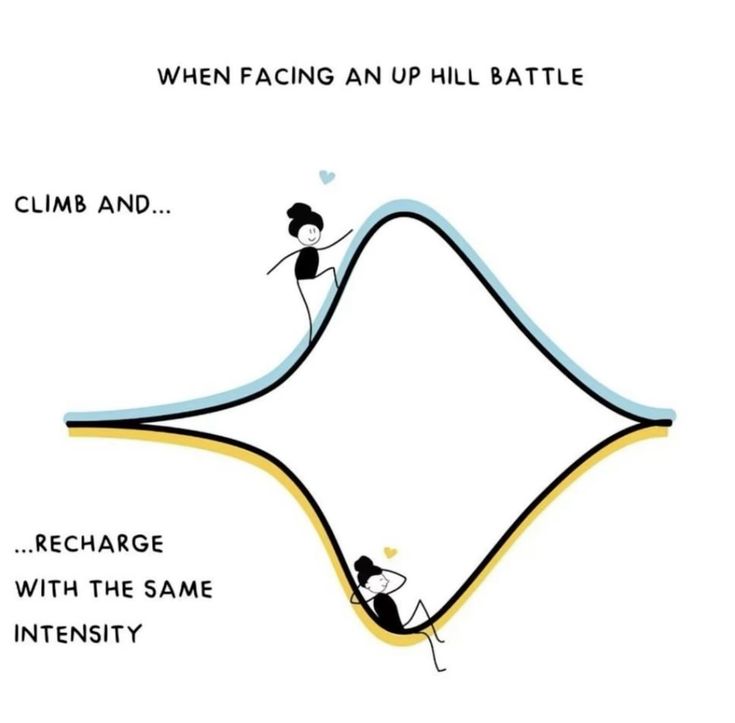
And it helps to remember that tired is information, not a character flaw. Feeling exhausted by the weight isn’t a sign you’re not strong enough for it. It’s a signal that the arrangement isn’t working.
Putting it down doesn’t mean dropping it
There’s a difference between refusing to help and refusing to be the only option. Most of the time, what people actually need isn’t for you to disappear from the heavy lifting entirely — it’s for you to stop being the automatic default. That distinction matters, because it means you don’t have to become someone who doesn’t care in order to stop being someone who’s crushed by caring too much, too often, alone.
The heavy lifting will probably always find its way to you, at least some of the time — that’s just what happens when you’re good at things and willing to show up. But you get to decide how much of it is yours to carry, how often, and for how long before you ask for a hand. That decision doesn’t make you less capable. It makes you someone who understands that even the strongest arms need rest, and that asking for help isn’t the failure — carrying everything alone until you break is.
So the next time you feel that particular tiredness creeping in — the kind that comes from doing the heavy lifting one more time when you swore you wouldn’t — take it as the signal it is. Not a reason to feel guilty. A reason to finally put something down.

 The Expression Hub
Leave a comment