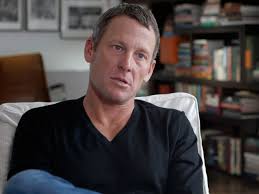
• Starring: Lance Armstrong , Reed Albergotti, Frankie Andreu, Betsy Andreu, Johan Bruyneel, Alberto Contador, Daniel Coyle, Michele Ferrari, George Hincapie,

    Directed By: Alex Gibney

    Genre: Documentary

    “Deception may give us what we want for the present, but it will always take away in the end.”

    -Rachel Hawthorne

    This week’s pick explores a story of a person considered one of the greats in the history of cycling. But then a can of worms spilt out and spelt doom for him. His entire world came crashing down. Knowing that his game was up, he decided to come out clean about his deception. However, after coming out clean, did he lose respect or did he gain more admirers for speaking out the truth? Lets find out.

    Synopsis: Lance Armstrong was what one would describe as a perfect example of a person who was an inspiration to all. A person who gets struck by testicular cancer. Yet, he makes it by ending up winning seven Tour De France consecutively. His Livestrong Foundation raised millions for cancer research and awareness. In short, he was a person who was a ray of hope for a lot of people.

    And then one day, it all came crashing down. This is what Alex Gibney tries to explore through his documentary “The Armstrong Lie“. What was supposed to be a story about how a man overcomes all the odds ended up being a Pandora box of how a fraud was carried out.

    The scale at which the deception was carried out was immense. For over a decade, he ended up masterminding the most sophisticated, professionalized and successful doping program in the world of cycling. He bullied teammates into participating, threatened whistleblowers, intimidated journalists, and sued anyone who dared suggest he was anything less than clean.

    The level of fraud he carried out was multi-dimensional. This is what is explored in the documentary. Of how a symbol of hope became a face of fraudulent activities.

    Scrutiny: Gibney’s documentary explores the emotions of Lance in his three different phases. The confident champion who controlled his narrative after making a comeback; the aggressive accused who maintained his innocence even though allegations mounted and that of a disgraced athlete who started making partial admissions once the truth came out.

    Another interesting aspect of the documentary is that it explores the theme of self-deception.He didn’t just lie to the world.But instead he constructed an alternate reality where his actions were justified.It exposes an ugly picture of what winning at any cost means as the end always justified the means. However, this win at any cost attitude ended up creating a downward spiral from which escape became impossible without total destruction.

    But was he the only one who was responsible for the entire mess? This is a question the documentary tries to explore as it showcases the complacency in the world of professional cycling. It also exposes the role media plays . It failed as a watchdog as Lance used it to control the story he was telling .

    It also highlights a tragic truth that people who tell the truth are often victims of professional exile, financial ruin or personal attacks. In spite of that it also reminds us that while truth may not prevail always immediately; persistence about it leads to a breakthrough.

    The Sentiment:The Armstrong Lie is an eye-opening watch.The reason why it is eye-opening is because it portrays the fragile nature of media. It shows how desperately we want to believe in heroes but this desire blinds us to red flags.

    His story serves as a caution about the dangers of unchecked ambition and the corrosive effects of lying. As one deception after another created an elaborate house of cards which ultimately collapsed.

    But despite one’s power, wealth, celebrity friends, and sophisticated PR machine, the truth always finds its way out and facts do prevail over fiction. This is a very crucial lesson especially in times when truth often seems negotiable and “alternative facts” compete for attention.

    It also leaves behind a question for the viewers-Is redemption possible after a calculated, long-term deception? Well that depends what your value system is about and what you tend to prioritize the most.

    Rating:****
    Que : Which country did Michele Ferrari belong to?

    a. Italy

    b. United States of America

    c. Ireland

    d. France

    Quote Unquote: “I viewed my battle with cancer as an athletic competition. But in that, you either win or you lose. When you lose, or if you lose, you die. So I took that perspective, which is a little dark, and I put it into everything I’ve done since then. I like to win. But more than anything, I can’t stand the idea of losing, because, to me, that equals death.”
    Continue reading →: The downfall of a supposed hero?
  • Biking tales

    Genre: Sports/Slice-of life

    Number of episodes: 9

    Presented by: Cycling Octopus: Cinematic Indian Documentaries

    “A gem cannot be polished without friction nor a man perfected by trials.”

    -Chinese proverb

    This month raises tribute to the most neglected part of our life-health. It is often said health is wealth. Or as Swami Vivekananda says, “A healthy mind resides in a healthy body. ” But in the hustle and bustle of life, we often forget or neglect this aspect. And then we end up up having various diseases. However, if we care for our health we do not have to suffer in the long run. After all an average human being lives for a minimum 60 years. So, if you have been someone who has neglected your health for a long time, now is the high time to get your health back on track slowly and steadily.

    There are different ways of achieving your health goals. Bicycling is one of the methods so is racing with a motorcycle or motocross as someone might refer to. This week’s pick revolves around nine such stories which involve the love for bikes in some or the other manner.

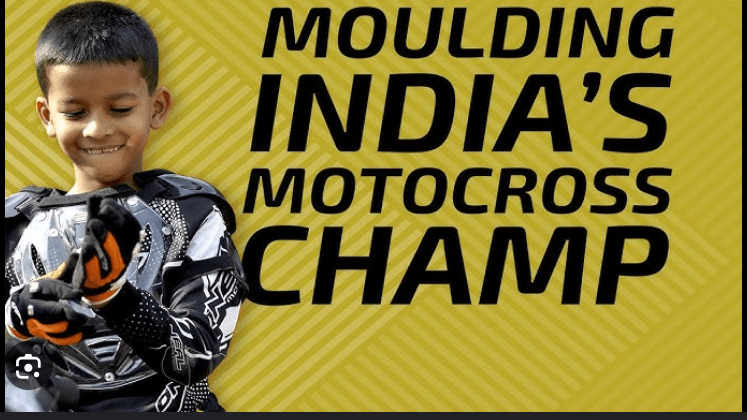
    Synopsis: Friction tells us 9 such stories which are connected with the world of biking in some manner. All of them share one thing in common and that is their love for bikes whether it be a bicycle or a motorcycle. While some have pursued their love for biking in the form of racing; others have helped restore or collected bikes in any form. While they reminisce about the good times they had while biking. They also lament the fact about the present condition of the sport. But they are hopeful or talk about how the scene can change. One story talks about how a future generation is being shaped up to race in motocross races . While the other talks about how she challenges herself to explore outside her comfort zone . There is an individual who built India’s fastest electric bike and the challenges he and his friends faced while doing so.

    Assessment: Friction tries to explore the love one has for biking in different forms. It tries to bring individuals from different walks of life and try to understand what makes them love the sport. It offers a fresh take by providing multiple perspectives. While the stories are nice and refreshing as they highlight the love; the cinematography could have been a little better. But it can be understood as a case wherein one might have faced budget constraints or a case wherein high-quality camera equipment might not be available. Also, if there might have been some connecting factor apart from the love of biking; it would have been a better case. This is because the human brain or me as a viewer can connect better when there is a pattern or something which connects the dots. What should be appreciated is the fact that they decided to put in the effort and bring together 9 different stories. This is because it takes a lot of time and effort to work on such projects. Another good point is that the episodes are short the maximum time duration is that of 17 minutes. So, if you are struggling with time , then this can be your pick.

    The View: Friction is a good watch if you are looking for something different. It helps us to meet different people from the city of Pune who are passionate about one thing- their love for bikes. So, if you are a person who loves slice-of-life stories or a person who is a lover of bikes then this show can be watched by you.

    Rating: ***

    Baap Dialogue: “It is the enthusiasm that keeps you going not the money.”

    Que: What is the name of the company which built India’s fastest electric bike?

    a. Torque Motors

    b. Hero Motors

    c. Thomas Motors

    d. Tork Motors

    Continue reading →: Biking tales
  • “The world needs all types of minds.”

    -Temple Grandin

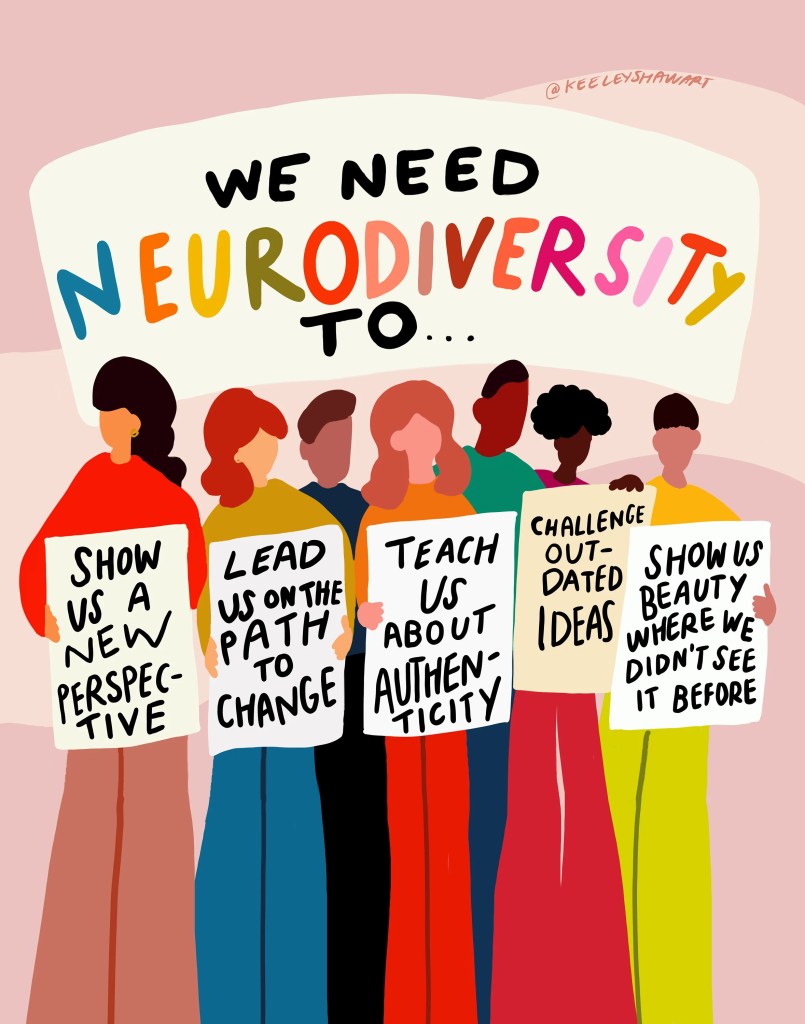
    As the month comes to an end, so does the celebration of Neurodiversity Awareness Month. I do hope that by my posts, I have tried to create a sense of empathy and awareness for these people. If you did love them and would want me to write more on this topic every year, do tell me in the comments section. I would be happy to bring on board more on this topic by exploring different mediums.

    Since its the end of the series, I decided to finish it with a bang. And this I chose to do by finding such people in the world of literature. The world of literature always talks about normal people like you and me. But there have also been instances where it has spoken about fantastic depictions of people who are now identified as neurodivergent in psychological terms. So, lets try to explore them.

    Representation of neurodivergence over time

    The history of literature contains many characters that show features which resemble these special group of people. They might have been termed as “odd”, “eccentric” or “difficult”. However, what people might have not understood that their brains functioned differently. And this can be attributed to the fact that there was lack of awareness in this field.

    Take for example, Jane Eyre’s friend Helen Burns from Charlotte Bronte’s novel of the same name. She has an intense focus, sensory sensitivities, and difficulty with certain social expectations. This can be linked to traits displayed in autism. Or even our favourite detective of all times-Sherlock Holmes who possesses exceptional pattern recognition, and deep specialized knowledge, but has social difficulties. This too aligns with many autistic experiences; though Sir Arthur Conan Doyle never portrayed him as one.

    These historical characters were never created as characters who possessed neurodivergent traits.Yet, they do provide some patterns of recognition and connection for readers with neurodivergence. Exploring these characters from a different lens shows us that these experiences have always been a part of humanity. It is just that we are becoming more aware and have developed a language to describe such experiences.

    However, in recent years, there has been a deliberate representation of these people which continues to grow. For instance, Christopher Boone in Mark Haddon’s “The Curious Incident of the Dog in the Night-Time” (2003) marked a significant milestone. The reason was: a first-person narrative from an autistic perspective. It was also path-breaking as it helped solidify the fact that even neurodivergent protagonists can make great literary characters.

    In today’s times, works like Helen Hoang’sThe Kiss Quotient” which has autistic protagonists or Eliza Frye’s Jazzy Little Drops” which revolves around ADHD experiences continues to evolve the scene.This is because these works are themselves being written by neurodivergent authors; thus bringing an authentic outlook.

    Neurodivergence in different genres

    It is not only contemporary realistic fiction that has captured neurodivergence, other literary genres have done a great job as well.

    In the field of mystery and fiction, characters with intense focus and pattern recognition have gained prominence. Apart from Sherlock Holmes, Lisbeth Salander from Steig Larsson’s Millenium Series too displays traits which resemble autism along with exceptional investigative skills.

    Science fiction too has its share of neurodivergence. This is in the form of Elizabeth Moon’s The Speed of Dark“. This explores autism in a near-future setting where “cures” become available. This thus, raises profound questions about identity and difference. Or Becky Chambers’ The Long Way to a Small, Angry Planet” which normalises cognitive differences across species.

    The genre of fantasy literature too hasn’t shied away from embracing it. R.F. Kuang’s The Poppy War” has a protagonist whose hyperfocus and social differences read as potentially ADHD. However, the portrayal of the protagonist shows how these traits become advantages in certain contexts.

    And if you are a lover of the romance genre, neurodivergence has made its presence felt here as well. Helen Hoang’sThe Kiss Quotient” and “The Bride Test” feature autistic protagonists navigating relationships.They also bring a nuanced understanding of sensory experiences and communication differences to the genre. Though a word of caution:such works can feel problematic to some.

    Stereotypes that harm

    Even though progress is being made in the space of neurodivergent literature, problems still persist. This is because many times a certain portrayal of a character makes it prone to stereotypes. This needs a critical examination.

    Take the example of the “savant” stereotype. This was brought into the mainstream by the character of Rainman. Though it succeeded in bringing awareness about autism.But it also brought a misconception with it that all individuals with autism possess extraordinary mathematical or memory capabilities.

    Or the portrayal of a neurodivergent individual as a burden. This is equally bothering as well. As such type of portrayal brings an imbalance between how experiences are viewed by neurotypical or neurodivergent people. This is highlighted in  Jodi Picoult’s House Rules” where in the mother of the protagonist creates a list of House rules as she devotes herself to the protagonist. The reason being the protagonist suffers from Asperger’s Syndrome.

    And the most hurtful is the portrayal of a “deficit-only” portrayal, where neurodivergent characters are defined exclusively by their challenges. Such portrayals fail to acknowledge the strengths or show the complete personhood of that person. Also, it reinstates the fact that neurodivergence is limiting which is not the case.

    Why do such portrayals matter or are harmful? This is because, for many readers who do not know such individuals on a personal level, literature shapes their understanding of neurodiversity. And when novels consistently present limited or harmful portrayals, they extend real-world stigma and misunderstanding.

    Way ahead for neurodivergent literature:

    As awareness grows, things look promising in the literature front of neurodivergence. Firstly, intersectionality is gaining crucial recognition. Works are exploring how neurodivergence intersects with race, gender, sexuality, and other aspects of identity. Akwaeke Emezi’s Freshwater,” though focused primarily on spiritual experiences, incorporates neurodivergent perspectives within its Nigerian context.

    Middle-grade and young adult literature is also becoming particularly rich with neurodivergent characters. This is offering younger readers the representation many older neurodivergent individuals lacked growing up. For instance, Elle McNicoll’sA Kind of Spark” features an autistic protagonist advocating for memorial recognition of women persecuted as witches. This draws subtle parallels between historical misunderstanding of difference and contemporary autism acceptance.

    Poetry and experimental forms are also becoming important mediums by which neurodivergent experiences are expressed. The fragmented structures in Ocean Vuong’sOn Earth We’re Briefly Gorgeous” mirror non-linear thinking patterns, while Ada Limón’s poetry often touches on experiences of anxiety and difference.

    Conclusion:

    Literature has the power to transport one into another person’s mind. Neurodivergent literature helps readers to experience processing systems that are different from normal brains.

    As both writers and readers, we can advocate for authentic representation by supporting neurodivergent authors, approaching stereotypical portrayals critically, and celebrating works that capture the complexity of neurodivergent experiences. This helps create a world where cognitive diversity is recognized not as deviation but as an essential expression of humanity’s remarkable variation.

    Continue reading →: Finding and celebrating neurodivergence in literature

I’m Roshani

Welcome to The Expression Hub! I’m Roshani, who loves to express herself through the medium of writing. This blog is my little corner of the internet where I dive deep into the world of movies, books, and web series—reviewing, analyzing, and sometimes just ranting about the stories that make us laugh, cry, and question everything.

Beyond reviews, you’ll also find my personal musings—random thoughts, life reflections, and the occasional deep dive into the things that inspire me. Think of this as a space where art meets emotion, and where honest opinions matter more than star ratings.

Join me as we explore incredible stories together, one post at a time. Have a recommendation? Let’s talk—I’m always up for discovering something new!

Let’s connect

Design a site like this with WordPress.com
Get started