• Genre: Family entertainer

    Number of episodes:8

    Presented by: Netflix

    “Our wounds are often the openings into the best and most beautiful part of us.”

    -David Richo

    The conversations around mental health has transformed dramatically.What was once considered as a taboo, is now being discussed openly. Growing awareness campaigns are paving way for crucial progress. Disabilities are not only physical in nature, they include mental health conditions as well. As, we celebrate the Disability Pride Month, this week, we put on a spotlight on the same and recognize the strength and resilience of each individual.

    This week, we are diving into something unique- a show which is groundbreaking in nature. It gives childrem with anxiety a voice, a mirror, and most importantly, hope. This isn’t just another feel-good family show – it’s a carefully crafted narrative that’s changing how we talk about mental health with young audiences.

    Synopsis: The Healing Powers of Dude is a story of Noah Ferris, an 11-year old boy who has social anxiety disorder. He gets an emotional support dog to help him manage his disorder. This is a series which is based on the personal experiences of Littenberg-Weisberg who suffered from the same. And when something displays authenticity, it resonates deeply with individuals who have walked similar paths.

    His journey from homeschooling to entering middle school with his support dog, Dude captures the struggle that millions of children face daily. It highlights the messy uncomfortable reality of anxiety mixing it with right amount of humour and heart.

    Assessment: The Healing Powers of Dude extends beyond entertainment . It also makes up for those people who are unable to see themselves. It provides a vehicle to kids who suffer from anxiety to tell their parents how they feel. It also bridges a crucial communication gap many families struggle with providing a common language for discussing mental health challenges.

    It also showcases a reciprocal relationship between Noah and Dude reflecting the real-world dynamics of emotional support animals – it’s not about what the animal provides, but about the mutual bond and responsibility that develops. Another great highlight is that it does not only portray a person who suffers from social anxiety , it also showcases a person with physical disability. This helps to send a powerful message of inclusion and representation. A topic which is discussed among adults but is never talked about when it comes to kids.

    In addition it also has interesting creative animation sequences and visual metaphors to help viewers understand what social anxiety feels like from the inside. This approach is particularly effective for younger audiences who might not have the vocabulary to express their own feelings, while also helping parents and educators better understand the internal experience of anxiety.

    Overall, it tries to balance serious subject matter with age-appropriate humor, creating a viewing experience that’s both educational and entertaining. It proves that children’s programming can tackle complex topics without being heavy-handed or overwhelming.

    Subsequently it also creates opportunities for meaningful conversations between parents and children about mental health, emotional support, and the importance of seeking help when needed. It normalizes therapy, medication, and other forms of support without stigma, presenting them as tools for wellness rather than signs of weakness.

    Areas where the same can be improved-

    The Healing Powers of Dude deserves praise for its groundbreaking approach to children’s mental health, it’s important to acknowledge areas where the series falls short or could be enhanced

    1. It just represents people from a single aspect of mental health spectrum . A broader range of mental health challenges could make the show more inclusive.
    2. The show occasionally presents overly simplified solutions to complex mental health challenges. Real-life anxiety management requires ongoing work, setbacks are common, and progress isn’t always linear.
    3. It should have explored how mental health challenges intersect with different socioeconomic backgrounds. Access to therapy, emotional support animals, and mental health resources varies significantly across different economic circumstances – a reality the show doesn’t fully address.
    4. Real emotional support animals require training, consistency, and aren’t cure-alls for mental health challenges. The show occasionally blurs the line between realistic support and fantasy solutions.
    5. The show’s commitment to remaining family-friendly sometimes limits its ability to dive deeper into the more challenging aspects of living with anxiety.

    The View: No show or any piece of creation is perfect and this applies to The Healing Powers of Dude as well. It demonstrates that audiences – both children and adults – are hungry for authentic, inclusive stories that reflect the diversity of human experience. The series paves the way for more shows that tackle important topics with sensitivity, humor, and heart.

    As we continue to evolve our understanding of mental health, particularly in children, shows like “The Healing Powers of Dude” become essential viewing. They don’t just entertain – they educate, inspire, and most importantly, help young viewers feel seen and understood. Future series can build on both the successes and shortcomings of this pioneering show to create even more comprehensive and nuanced representations of mental health.

    So, this one is a must watch for -1. Families with children expeiencing anxiety

    2. Parents seeking to understand childhood mental health

    3. Educators and school counsellors

    4. Anyone advocating for better representation

    Children with severe anxiety disorders and families new to mental health conversation should avoid the same. The Healing Powers of Dude” represents more than just another Netflix series; it’s a cultural milestone in how we approach children’s mental health in media. While it may not be perfect – no single show can represent every experience or solve complex issues – it’s a crucial first step toward more inclusive, authentic storytelling.

    The series succeeds in its most important mission: giving children with anxiety a mirror to see themselves in, while helping others understand that mental health challenges are simply part of the human experience. It normalizes therapy, emotional support, and seeking help without stigma, potentially influencing an entire generation’s relationship with mental health.

    Perhaps most importantly, “The Healing Powers of Dude” proves that children’s programming doesn’t have to choose between being educational and entertaining. It can be both, tackling serious subjects with humor, heart, and hope. The series demonstrates that when we trust children with authentic stories, they respond with understanding, empathy, and resilience.

    In a world where one in five children experiences a mental health disorder, representation like this isn’t just nice to have – it’s essential. Every child deserves to see themselves reflected in the stories we tell, to know that their struggles are valid, and to understand that seeking help is a sign of strength.

    “The Healing Powers of Dude” may have some limitations, but its impact extends far beyond its 30-minute episodes. It’s changing conversations in living rooms, classrooms, and therapists’ offices across the country. For that reason alone, it’s worth watching, discussing, and celebrating.

    Rating: *** and a 1/2 stars

    Baap dialogue: “You feel everything more deeply than most people. That’s scary sometimes, but it also means you understand things others miss. You notice when someone else is hurting. You care more. That’s not a weakness, Noah – that’s your strength.”( Dude to Noah)

    Ready to Experience the Healing Powers Yourself?

    “The Healing Powers of Dude” is available now on Netflix, offering families a chance to experience this groundbreaking series together. Whether you’re a parent looking for quality programming that addresses real issues, an educator seeking resources for discussing mental health, or simply someone who appreciates authentic storytelling, this series deserves a place on your watch list.

    Start your journey with Noah and Dude today – because sometimes the most powerful healing comes from knowing you’re not alone in your struggles. Head to Netflix now and discover why “The Healing Powers of Dude” is changing the conversation around children’s mental health, one episode at a time.

    What is the name of Noah’s sister?

    a. Sarah

    b. Embry

    c. Valentina

    d. Celine

    Love This Article? Share It With Others Who Need to See It!

    Found this post helpful? Mental health awareness starts with sharing authentic stories and resources. Help spread the word about the importance of children’s mental health representation by sharing this article with:

    • Parents who are navigating their child’s anxiety or mental health challenges
    • Educators looking for resources to better understand their students
    • Mental health advocates working to reduce stigma around childhood mental illness

    Your shares help more families discover resources that could make a real difference in their lives. Together, we can normalize conversations about mental health and create a more inclusive world for children facing these challenges.


    Found this analysis helpful and want more content that makes complex topics accessible? I’m a professional content writer who specializes in creating engaging, educational content about health, wellness, and family topics. Contact me here or on Instagram @theexpressivemind to discuss how authentic storytelling can help your organization connect with your audience in meaningful ways.
    Continue reading →: Healing pains of growing minds
  • The month of July is celebrated as Disability Pride Month . It is a month which is dedicated to honoring the experiences, achievements and contributions of people with disabilities. This month-long observance serves as both a celebration of disability culture and identity, and is a powerful reminder of the ongoing fight for equality, accessibility, and inclusion.

    Tracing the origin of the month-

    Disability Pride Month traces its roots back to July 1990, when the Americans with Disabilities Act was signed into law. This groundbreaking legislation marked a pivotal moment in disability rights history, prohibiting discrimination based on disability and mandating equal access to public accommodations, employment, and services.

    The concept of “pride” in the disability community mirrors other civil rights movements, emphasizing that disability is a natural part of human diversity rather than something to be ashamed of or hidden. It represents a shift from viewing disability through a medical or charity model to embracing it as part of one’s identity and lived experience. This perspective challenges society’s ableist assumptions and promotes the understanding that people with disabilities are not broken or in need of fixing, but rather full participants in society who deserve equal rights and opportunities.

    Understanding disability culture and identity-

    Disability culture includes everything from disability history and literature to adaptive sports, assistive technology innovations, and unique forms of artistic expression. This culture has developed its own language, customs, and ways of understanding the world that are often invisible to the non-disabled community.

    Central to the disability culture is disability pride itself. This pride manifests in various ways: celebrating adaptive techniques and assistive technologies, finding community with other disabled people, and recognizing the unique perspectives that come with navigating the world with a disability. Many disabled individuals speak of the creativity, resilience, and problem-solving skills they’ve developed, viewing these as strengths rather than compensations for deficits.

    The disability community is pretty diverse. It includes people with physical disabilities, sensory impairments, intellectual and developmental disabilities, mental health conditions, chronic illnesses, and invisible disabilities. They are united by a single purpose-common struggles against discrimination and barriers to full participation in society.

    Importance of representation and visibility-

    One of the most crucial aspects of Disability Pride Month is increasing visibility and representation of people with disabilities. As per the World Health Organization, 15% of the population suffers from some kind of disability. These people also remain significantly underrepresented in media, leadership positions, and public discourse.

    Positive representation matters because it challenges stereotypes and misconceptions about disability. They either fall into the category of an inspirational figure or are viewed as a villain whose disability is linked to their evil nature. These one-dimensional representations fail to capture the full humanity and complexity of disabled people’s lives.

    When people with disabilities see themselves reflected authentically in movies, television, books, and other media, it validates their experiences and shows that their stories matter. For non-disabled people, exposure to diverse disability experiences helps break down barriers and foster understanding.

    Accessibility is more than ramps and elevators

    Disability Pride Month provides an opportunity to educate the public about accessibility and its importance. While many people think of accessibility in terms of physical accommodations like ramps and elevators, true accessibility encompasses much more. It includes digital accessibility for websites and apps, captioning and sign language interpretation for deaf and hard-of-hearing individuals, audio descriptions for blind and visually impaired people, and cognitive accessibility for those with learning differences or intellectual disabilities.

    The concept of universal design demonstrates how accessibility benefits everyone, not just people with disabilities. Despite this , accessibility remains a significant challenge. Many buildings, websites, and services still present barriers to people with disabilities. This ongoing struggle highlights the need for continued advocacy and education about the importance of inclusive design.

    Intersecting disability with other aspects of identity

    Understanding disability requires recognizing how it intersects with other aspects of identity.These intersections matter because they shape how individuals experience disability and navigate systems of support. Effective disability advocacy and policy must consider these multiple identities and work to address the complex barriers that arise from intersecting forms of discrimination.

    The economic impact and employment rights-

    One of the most significant challenges facing the disability community is employment discrimination and economic inequality. Despite legal protections, people with disabilities face unemployment rates that are consistently higher than those of non-disabled individual.

    The unemployment and underemployment of people with disabilities represents a massive loss of talent and potential for society. When barriers to employment are removed and accommodations are provided, disabled workers often demonstrate exceptional loyalty, creativity, and productivity. Many successful companies have recognized this and have implemented inclusive hiring practices that have benefited their bottom line while advancing disability rights.

    Employment rights for people with disabilities go beyond just getting hired. They include the right to reasonable accommodations, equal pay, and advancement opportunities. These rights are protected by law, but enforcement and awareness remain ongoing challenges.

    Role of technology in overcoming disability-

    Technology has revolutionized the lives of many people with disabilities, providing new opportunities for communication, mobility, learning, and employment.However, technology also presents new challenges. As society becomes increasingly digital, ensuring that new technologies are accessible from the start becomes crucial.

    Going beyond physical disabilities-

    Disability Pride Month also brings attention to mental health conditions and invisible disabilities, which are often overlooked or stigmatized. Conditions like depression, anxiety, ADHD, autism, chronic pain, and autoimmune disorders may not be immediately apparent to others, but they significantly impact the lives of millions of people.

    The stigma surrounding mental health conditions can prevent people from seeking help or disclosing their disabilities when they need support.

    Recognizing and supporting invisible disabilities requires a shift in how society thinks about disability. It means understanding that not all disabilities are visible and that people may need different types of support at different times.

    Way Forward-

    As we celebrate Disability Pride Month, it’s important to remember that the work of creating an inclusive society doesn’t end when July does. True progress requires ongoing commitment from individuals, organizations, and governments to remove barriers, change attitudes, and create opportunities for people with disabilities to fully participate in all aspects of life.

    This includes continuing to advocate for stronger accessibility laws and better enforcement of existing ones, supporting disabled-owned businesses and disability-led organizations, and working to change cultural attitudes about disability. It means listening to disabled voices, following disabled leaders, and recognizing that people with disabilities are the experts on their own experiences.

    The goal of Disability Pride Month is not just to celebrate how far we’ve come, but to inspire continued action toward a more inclusive future. By embracing disability as part of human diversity and working to remove barriers, we can create a society where everyone has the opportunity to thrive.

    Need help creating content?

    As a content writer, I’m committed to putting my best foot forward with every project. What drives me most is creating content that truly represents and welcomes everyone—including people with disabilities and marginalized communities.

    What I lack in years of experience, I make up for with genuine passion, attention to detail, and a commitment to continuous learning. I’m building my portfolio with purpose, focusing on content that makes a positive impact while helping businesses and organizations connect authentically with their communities.

    I believe everyone deserves to see themselves represented in the content they consume, and I’m excited to help create that representation through thoughtful, inclusive writing.

    Interested in working with a dedicated new writer who’s eager to help your message reach everyone? I’d love to discuss how we can collaborate to create content that truly makes a difference. Let’s chat about your project and how I can bring fresh energy and perspective to your content needs! I can be reached out here or on Instagram as @theexpressivemind. Also, if you do have any tips or stories to share, feel free to share them in the comments section .

    Continue reading →: Building an accessible world proudly
  • The Algorithm of Leadership

    Author: Steven Bartlett

    Genre: Self-help/Business

    “You brand is what other people say about you when you are not in your room.”

    -Jeff Bezos


    What does it take to be an entrepreneur who is crushing it in business? The ones who seem to have it all figured out, are breaking records and climbing mountains metaphorically? The success stories which we come across LinkedIn, business magazines and the ones which are supposed to inspire millions .What are they made of? Is it just a brilliant idea or hitting the right trend at the right time?

    We often look at the finished product-the huge valuations, the expansion over the globe, the smart marketing. But what we forget is that the journey behind this is always messy and brutal.

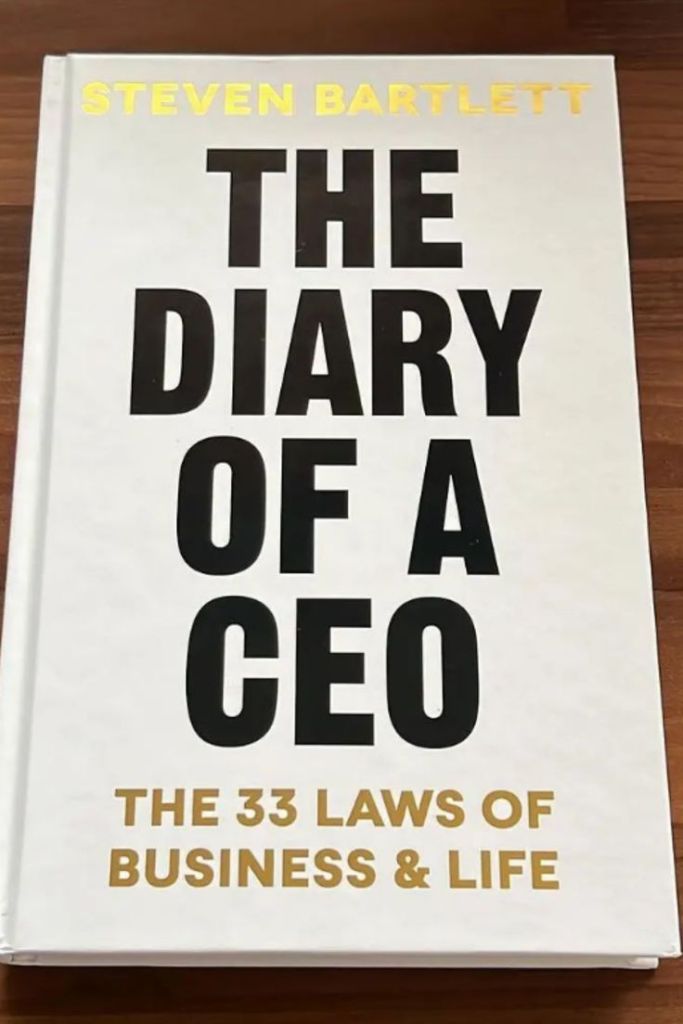
    This is what led me to pick up Steven Bartlett’s “The Diary of A CEO”. Because it is easy to admire things from afar, understanding their day-to -day, their thought process, the real triumphs and struggles is where the lessons lie. So, what are these lessons and how can one build not only a business but also a legacy. Let’s take a deep dive.


    Synopsis:

    Unlike other books which gives you recycled wisdom and motivational fluff, The Diary of A CEO cuts through the noise. It tells you the truth about what building a business actually looks like. He doesn’t sugar coat things . Instead he serves up 33 raw, unfiltered laws that governed his journey from a broke university dropout to a successful entrepreneur and investor on Dragons’ Den.

    The book reads like a conversation with that honest friend who will give you straightforward advice of how tough the life of an entrepreneur can be. And this is refreshing in nature. This is because they are not some theories picked from management textbooks . Instead, they come from his own experiences which adds a touch of reality.

    Reading this , helps one realise the straightforward, sometimes uncomfortable, realities of how tough the life of an entrepreneur can truly be. And in a world which obsesses over hyper-optimism and curated perfection, that kind of honesty is welcome. As, it makes one realise that the struggle one undergoes is not to be viewed as a failure, but a pre-requisite for genuine growth.


    Analysis:

    The good partBrutally Honest Insights

    1. The reality check of mental health- The author tries to address the psychological toll entrepreneurship can take on one’s mind. While, others emphasis on a work-life balance, this one digs deep into the anxiety, depression, and identity crises that often accompany building a business. The importance of being boring is a major highlight. In a world where we are bombarded with stories of overnight successes and viral moments, this one principle keeps it real. It might not be social-media worthy but is the truth.
    2. Practical frameworks that work- Some books leave you inspired but clueless about what are the next steps that must be taken. This one, however provides actionable frameworks. For instance, the author insists on hiring people who are willing to learn and unlearn rather than qualifications. Though this is not the reality , but is a pretty practical advice. Also, one needs to demonstrate the mindset shift one requires to build something .
    3. Relationship between success and sacrifice- The author honestly examines what success looks like. Unlike others, he doesn’t glorify the hustle culture nor doesn’t he pretend you can build something working 40-hour weeks. Instead, he tries to portray a fine picture of the the trade-offs involved and helps you decide if they’re worth it for your specific situation.

    The not-so good part: The pitfalls

    1. The survival bias: This is a story of someone who ultimately made it despite the failures and struggles . However, genuine his advice might seem, it does not seem to apply to everyone. The reason being simple: not everyone has the same circumstances or risk tolerance.
    2. Industry-specific insights: Though the core principles of any business remain the same, the execution can differ across various industries.
    3. The paradox of productivity- The productivity methods advocated by the author might be a hindrance to those who have families or other obligations.

    The takeaway-

    The biggest lesson one can take from this book is that it is not a specific strategy or a tactic that grows a business. Rather, its a shift in perspective. Bartlett forces you to confront the reality that building something meaningful requires becoming a different person than you are today. That transformation is uncomfortable, messy, and often painful.


    The Verdict- Should you read this one?

    Though not perfect, “The Diary of a Perfect CEO” is a good read. Read if –

    1. An honest, unfiltered take on entrepreneurship is required.
    2. If you are tired of overtly motivational content.
    3. Need practical frameworks to build and scale a business.
    4. Want to understand the psychological challenges of leadership.

    Avoid it if you-

    1. Prefer step by step tactical guides.
    2. Are looking for industry-specific advice outside of digital/social media
    3. Want a quick read as this takes some time to process.

    This book might not be groundbreaking in nature. However, it has some genuine, practical and refreshingly honest advice of what it takes to build a business. This book succeeds in capturing its readers . Due to the fact, that it doesn’t offer easy solutions or overnight success. Instead, it provides a realistic roadmap for building something meaningful while preserving your sanity.

    And in a world where business gurus make a living by selling dreams which seem fictional, this one offers a realistic picture.

    Whether you are just starting your journey as an entrepreneur or are a person who has experience in running a business and need a perspective, this one will challenge your assumptions and save you from painful mistakes. This comes with a caveat- the journey is not going to be easy.


    Rating: *** and a 1/2 stars

    Cite Bite: “Stop telling yourself you’re not qualified, good enough or worthy. Growth happens when you start doing the things you’re not qualified to do.”


    Want to work together? Let’s create something amazing

    Speaking of honest, authentic content – if you’re tired of cookie-cutter writing that sounds like it came from a content mill, we should talk.

    Why work with me?

    I meet deadlines without reminders, I pay attention to tone and context (not just SEO), I bring research when needed but never let it drown your voice, and most importantly – I genuinely care about the work I do. If I take on your project, I’m all in.

    Every budget deserves great content, so let’s find a solution that works for you. Ready to turn your vision into reality? Let’s chat – I’m always up for a good conversation, especially if it involves books or big ideas!


    Love digging deep into books that matter?

    If this analysis resonated with you, join the community. I deliver honest, no-BS reviews and insights delivered straight to your inbox. I do this for you so that you do not have to suffer or think about picking what your next pick should be.

    Also, the link in the synopsis is an affiliate link. This, in other words means that I earn a small commission if you purchase through them. This doesn’t affect my honest opinion of the book – I only recommend resources I genuinely believe are valuable.

    Found this helpful? If you did find this review helpful, share it with someone who needs to read this book (or needs to hear some hard truths about entrepreneurship). Sometimes the best gift you can give someone is a reality check wrapped in actionable advice.


    Food for thought :The book challenges the idea that you can ‘have it all’ without trade-offs. If you had to choose between rapid business growth and maintaining your current relationships/lifestyle, which would you pick and why? Do tell me about the same in the comments section.

    Continue reading →: The Algorithm of Leadership

I’m Roshani

Welcome to The Expression Hub! I’m Roshani, who loves to express herself through the medium of writing. This blog is my little corner of the internet where I dive deep into the world of movies, books, and web series—reviewing, analyzing, and sometimes just ranting about the stories that make us laugh, cry, and question everything.

Beyond reviews, you’ll also find my personal musings—random thoughts, life reflections, and the occasional deep dive into the things that inspire me. Think of this as a space where art meets emotion, and where honest opinions matter more than star ratings.

Join me as we explore incredible stories together, one post at a time. Have a recommendation? Let’s talk—I’m always up for discovering something new!

Let’s connect

Design a site like this with WordPress.com
Get started