• Starring: Dustin Hoffman, Tom Cruise, Valeria Golino, Gerald R Molen, Jack Murdock, Ralph Seymour

    Directed By: Barry Levinson

    Genre: Drama/Road

    “Sometimes it is the people no one can imagine anything of who do the things no one can imagine.”

    -Alan Turing

    In today’s post, we cover a story of a person who is neurodivergent by nature but also responsible for instilling a sense of brotherhood and pride. The thing with neurodivergent people is that they do have the same needs and wants as that of a neurotypical human but they express their wants and needs in a slightly different manner which at times might be a bit challenging but with patience and time can be understood and be a person whom you can foster a great bond with.

    This week’s pick remains a timeless classic that explores autism and family relationships.It is a movie which has garnered critical acclaim and is a four Academy award winner. If you have guessed it, maybe this can be your excuse to travel down the memory lane again and cherish the good moments. So, jump in .

    Story line: RainMan is a story that revolves around a self-centered car dealer named Charlie Babbitt. He is in between a financial trouble when he learns about his father’s death. Seeing this as an opportunity, Charlie expects a substantial inheritance in his name. But he gets the shock of his life when he discovers that his father has left him only a classic convertible and some rose bushes while the rest of the proceeds are given to an unknown beneficiary. This leads him on an investigative trail.

    His investigation leads him to WallBrook, where he meets Raymond, the older brother he never knew existed. Raymond is autistic by nature who possesses extraordinary mathematical abilities, has routine-based behaviours but faces significant social challenges. Charlie being hellbent on receiving his share of inheritance kidnaps Raymond from the institution.

    But what begins as a cross-country road trip to fulfill his selfish motives slowly begins to turn into something meaningful. It transforms into a journey of slowing down and adapting along with a deep admiration and respect and a bond that evolves into a genuine brotherly connection. This journey transforms Charlie as a person as he discovers something more valuable than what he sought for-a genuine relationship with his brother and personal growth beyond his former self-centered existence.

    Scrutiny: The movie tries to balance entertainment with a fine development of the character. It also tries to address complex themes with sensitivity. Like for instance, take the evolution of Charlie as a person. Initially, he is shown as a person who is self-centered and has only one priority- that is to get his share of inheritance. But after spending time with his brother, he undergoes a change wherein he starts caring for his brother in a genuine manner. This change is portrayed subtly by Tom Cruise.

    Dustin Hoffman as Raynold impresses a lot as he delivers a performance which shows that a lot of research and empathy has been involved in the role. His character is a person who has his own fears, perspectives and choices which may not seem to similar as like other human beings, but gives a different perspective.It also tries to echo the sentiment that his thinking and way of living does not need any fixing even though it might be different.

    It tries to raise awareness about autism in a period where awareness was less about this condition. Though a very small percentage of people are affected by from what Raymond is shown to portray, this has given rise to public misunderstanding about the condition. But, the film deserves credit for treating Raymond’s condition with dignity rather than portraying it as something to overcome or cure.

    Also, the bond between the two brothers doesn’t develop suddenly but is a gradual development; as each with his own strengths try to develop a bonding. While Charlie’s transformation is more obvious, Raymond also shows subtle growth in his ability to adapt and connect with his brother.

    The visual language used by the director also conveys the emotional journey of the brothers beautifully. What begins as a life in a fast paced city slows down to portray Raymond’s deliberate, routine-focused approach to life .

    Sentiment: The movie navigates through a difficult emotional journey masterfully without any manipulation or a lot of sentimentality. It showcases a journey from frustration to acceptance, from lack of vulnerability to that of connection. It also has the ability to find moments of unexpected joy amid the challenges. This provides an emotional relief along with deepening our investment in the brothers’ journey. The movie also reminds us that meaningful relationships are often formed through shared moments of simple pleasure rather than grand gestures. It also reminds us of the fact that an acknowledgment of love sometimes means accepting limitations while still maintaining connection. A culturally significant piece of work which played an important role in starting conversations about neurodiversity.It also highlights the fact of how relationships can form across seemingly insurmountable differences. And we need not change ourselves as a person to accept one another but instead just embrace the differences one has in a positive manner.

    Cite Bite: “There is a thin line that separates family and strangers. In the end, it’s the bonds we choose to nurture that define us.”

    Que: What amount of money does Charlie’ s father leave?

    a. 2 billion dollars

    b. 3 million dollars

    c. 5 million dollars

    d. 10 million dollars

    Continue reading →: A journey of brotherhood and differently abled
  • Since it is Neurodiversity Celebration Month, it is high time that we try to understand what exactly neurodivergence is. Also, while understanding what neurodivergence is, we also try to understand what are the strengths of people with neurodivergent minds , how their mind functions while navigating the world around them and how schools and workplaces can be made inclusive. So, lets dive in.

    What is neurodivergence?

    Neurodivergence refers to a variation in the functioning of the mind that leads to different ways of thinking, learning, processing information and experiencing the world. Rather than viewing it as a deficit, the people who are advocates of the neurodiversity movement encourage us to view them as valid, natural variations in human cognition.

    Neurodivergent individuals are individuals with autism, ADHD, dyslexia, dyspraxia, dyscalculia, Tourette’s Syndrome and other neurological differences. This diversity does not represent a collection of disorders but rather an amalgamation of human neurological variation.

    What does it mean to be a neurodivergent individual?

    A neurodivergent individual experiences the world with a heightened intensity like for instance colours may seem brighter, sounds may be louder, more overwhelming emotions and many such patterns.

    Social interactions often are a major challenge for such individuals not because they do not want to feel connected but due to differences in communication styles. They interact differently , require more direct communication or become easily overwhelmed in social settings that normal human beings navigate with great ease.

    Cognitive processes that help us to plan, focus, remember instructions and manage multiple tasks are challenging for such individuals. Such tasks are easier for a normal human being . However, tasks which may seem complex are solved with great insight and creativity by such individuals.

    What are the hidden strengths of neurodivergent individuals?

    Though these individuals interpret the world differently, but many neurodivergent individuals possess an exceptional ability to hyperfocus on areas of interest diving deeply into subjects and developing expertise. This level of intense focus can make them exceptional at innovation and creative problem-solving.

    They are also good at identifying patterns in data, systems or ideas that others might miss. This leads to unique perspectives and innovative solutions. Many great individuals like Albert Einstein, Temple Grandin, Alan Turing used their this type of thinking and created a revolution in their fields.

    What are the challenges faced by neurodivergent individuals?

    Neurodivergent individuals even so being exceptionally talented face a lot of challenges while navigating the world which is made for neurotypical minds. Differences in sensory processing can make everyday environments overwhelming. Too much of light, noise or other sensory stimuli can stimulate a sensory overload which makes concentrating on a task difficult.

    Social expectations like unwritten rules, indirect communication and ambiguous social cues can feel like navigating a foreign land without a translation guide. To combat this, masking behaviors are developed by these individuals. These behaviors though help them adopt manners like normal human beings but leads to exhaustion and burnout.

    Cognitive processes can make simple tasks like organizing a workspace, managing time or chunking of bigger tasks are difficult for such individuals. These struggles are often labelled as laziness or incompetence when they actually reflect differences in the functioning of the brain.

    Connection between neurodivergence and mental health

    Chronic stress from too much sensory overload, masking, executive functioning and difficulties in social interactions can lead to anxiety and depression in such individuals.

    Also, many neurodivergent individuals face years of misdiagnosis, inappropriate treatments, or no support at all before receiving an accurate understanding of their neurotype. This often leads to internalized shame, imposter syndrome, and a distorted self-image.

    Mental health support for neurodivergent individuals is most effective when it acknowledges neurodivergence as a difference and works with rather than against neurodivergent traits. Therapy approaches that respect sensory needs, communication differences, and executive functioning challenges tend to be most beneficial.

    How do we go on to create an inclusive environment at work and in schools?

    Standardized teaching methods, curricula which is inflexible, and environments which are sensory-heavy can make learning difficult despite strong cognitive abilities for people with neurodivergence. Similarly, conventional workplace expectations around eye contact, multitasking, open-plan offices, and unstructured social interaction can create unnecessary obstacles to success for such people.

    So, to create effective educational approaches, the following can be considered-

    1. Have multiple means to engage, represent and express.
    2. Build strengths in areas of interest and ability.
    3. Give clear instructions.
    4. Ensure that environments are sensory-friendly with options for regulation.
    5. Recognize and accommodate differences in executive functioning.

    In the workplace, create environments where neurodivergent individuals can thrive by-

    1. Giving clear instructions about what is expected from them.
    2. Allowing flexibility in how tasks are to be accomplished.
    3. Creating environments which are sensory-friendly.
    4. Being result-oriented rather than conforming to the norms of the society.
    5. Recognizing and utilizing the unique perspectives such individuals bring.

    Organizations that are working on this are recognizing the fact that neurodiversity in the workplace is leading to innovation, problems being solved in a creative manner and creation of systems that work for everyone.

    How do we bridge the communication gap ?

    Neurodivergent individuals often face challenges concerning communication. They may interpret language more literally, or may struggle with implied meanings, or may communicate in ways that maybe too blunt or detailed for normal listeners. But these differences aren’t deficits. Instead, they’re simply variations in how human brains process and express information.

    So, to overcome this, neurotypical individuals can learn to be more direct, specific, and explicit in their communication, while neurodivergent individuals can develop strategies to navigate the implicit communication styles thus creating a middle ground where meaningful exchange can occur.

    How to make a neurodivergent individual feel safe in a relationship or in a community?

    Just like other human beings,neurodivergent individuals too desire and form meaningful relationships, though these connections may look different from neurotypical norms. These relationships often thrive on mutual understanding, explicit communication, shared interests, and respect for neurodivergent traits like the need for alone time, sensory considerations, and different expressions of affection. This can be implemented by finding community with others who share similar neurotypes. This can offer opportunities to be fully authentic without masking, to share coping strategies, and to celebrate neurodivergent strengths in an affirming environment.

    Way ahead

    As our understanding of neurodivergence continues to evolve, so too does our collective responsibility to create a world that embraces neurological diversity. This can be done in the following manner-

    1. Design spaces, systems, and interactions that work for all neurotypes from the beginning.
    2. Ensure conversations about neurodivergence .
    3. Appreciate the perspective put forward by neurodivergent individuals.
    4. Understand how neurodivergence intersects with race, gender, sexuality, and other aspects of identity to create unique experiences.
    5. Actively seek out and value the unique contributions neurodivergent minds bring to our communities.

    The path toward true inclusion isn’t simply about tolerance or accommodation—it’s about creating a world where neurodivergent individuals can fully participate, contribute their unique perspectives, and thrive as their authentic selves. This is what the neurodiversity movement reminds us that there is no single “right” way to think, learn, or perceive the world. But by accepting the full range of human cognition, we create stronger communities, more innovative solutions, and a more just and inclusive society for everyone.

    It is not our differences that divide us. It is our inability to recognize, accept, and celebrate those differences.” -Audre Lorde

    Continue reading →: Let’s understand neurodivergence
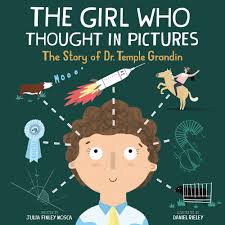
  • Author: Julia Finley Mosca

    Genre: Children’s Biography / STEM / Neurodiversity

    “The most interesting people you’ll find are ones that don’t fit into your average cardboard box. They’ll make what they need, they’ll make their own boxes.”

    -Dr. Temple Grandin

    A new month means a new series of blog posts. April aims to celebrate neurodiversity and strive to increase understanding and acceptance of neurodivergence. Neurodivergence implies that some people have a different way of thinking, learning, and experiencing the world. Autism, ADHD (Attention-Deficit/Hyperactivity Disorder), dyslexia (difficulty with reading), dyspraxia (difficulty with coordination), and Tourette’s syndrome (tics), are some examples of neurodivergence. Though they might have a different way of interpreting the world around them, they do have unique talents and perspectives. Like for instance , an individual with autism has incredible focus and attention to detail or a person with dyslexia may have brilliant visualization skills.

    But societal norms and expectations can sometimes create challenges for neurodivergent individuals. This is why the neurodiversity movement advocates for making the world more inclusive and understanding. So, through my blogs this month, I try to delve into their world through different media of expression. By undertaking this, I do hope that I am able to raise an awareness about the same and hope that we can create a more inclusive and understanding world for such people.

    This week’s pick talks about a young girl who was once misunderstood, labelled and excluded but later on brought a change in the world through her actions. How ? Read on to find out more.

    Synopsis: The Girl Who Thought In Pictures narrates the story of Dr. Temple Grandin who was a pioneering scientist and an advocate for autism. This book written by Julia Finley Mosca brings to life the incredible journey of a young girl who went on to revolutionize the world of animal science.

    Temple was born in a time when autism wasn’t well understood. People thought she was different as she didn’t speak until she was nearly four, and processed the world in pictures rather than words. But there was one person who believed in her and that was her mother. Her mother’s steady belief in her and her own thinking helped her to transform her so-called “different” brain into a superpower. The book captures how Temple learned to embrace her strengths and become a prominent name in the field of science and technology.

    Analysis: This book tries to give out a powerful message of how neurodiversity when channeled positively helps to solve problems which others can’t see. It also conveys a message that being different is not a weakness, but a strength. The rhythmic writing of the author makes it an ideal book for reading out aloud. Although the book is written in a poetic structure, it still addresses the challenges Temple faced . In a world where everyone is supposed to act in a certain manner at a certain age and perceive the world in the same manner as others, this book attempts to celebrate authenticity, resilience and brain diversity. It acts as a great guide for educators, parents and for anyone who has ever felt different. After all, isn’t life all about embracing your authentic self rather than fitting into the mould that the world designs for you?

    Verdict: This book is more than a biography — it’s a celebration of thinking differently, loving fiercely, and daring to break the mold. The book is a powerful conversation starter as it simplifies a complex, misunderstood subject like autism . It also helps children to understand that their differences can be their greatest strengths.

    From an educational standpoint, the book ticks all the right boxes. Teachers and parents can use it as a medium to discuss topics like neurodiversity, empathy, perseverance and scientific discovery. While for kids who struggle with the feeling of being different, the story of Temple Gardin can serve as an inspiration for not only overcoming obstacles but also for what she contributed to the world.

    This is a book that should be a part of every classroom, every library, and every home. It acts as an invitation to see the world through new eyes — eyes that may think in pictures, patterns, or possibilities. Whether you’re a parent, teacher, or simply a fan of stories that uplift and educate, The Girl Who Thought in Pictures is a must-have in your collection.

    Rating: ****

    Cite Bite: “Each person is special — so UNIQUE are our minds. This world needs your ideas. It takes brains of ALL kinds!”

    Que : Which invention of Dr. Temple Gardin is still in use?

    a. Milking machine

    b. Artificial Insemination

    c. Automatic Feeding Systems

    d. Cattle Corral

    Continue reading →: Steering the world through pictures

I’m Roshani

Welcome to The Expression Hub! I’m Roshani, who loves to express herself through the medium of writing. This blog is my little corner of the internet where I dive deep into the world of movies, books, and web series—reviewing, analyzing, and sometimes just ranting about the stories that make us laugh, cry, and question everything.

Beyond reviews, you’ll also find my personal musings—random thoughts, life reflections, and the occasional deep dive into the things that inspire me. Think of this as a space where art meets emotion, and where honest opinions matter more than star ratings.

Join me as we explore incredible stories together, one post at a time. Have a recommendation? Let’s talk—I’m always up for discovering something new!

Let’s connect

Design a site like this with WordPress.com
Get started