Presented by: Cycling Octopus: Cinematic Indian Documentaries
“A gem cannot be polished without friction nor a man perfected by trials.”
-Chinese proverb
This month raises tribute to the most neglected part of our life-health. It is often said health is wealth. Or as Swami Vivekananda says, “A healthy mind resides in a healthy body. ” But in the hustle and bustle of life, we often forget or neglect this aspect. And then we end up up having various diseases. However, if we care for our health we do not have to suffer in the long run. After all an average human being lives for a minimum 60 years. So, if you have been someone who has neglected your health for a long time, now is the high time to get your health back on track slowly and steadily.
There are different ways of achieving your health goals. Bicycling is one of the methods so is racing with a motorcycle or motocross as someone might refer to. This week’s pick revolves around nine such stories which involve the love for bikes in some or the other manner.
Synopsis: Friction tells us 9 such stories which are connected with the world of biking in some manner. All of them share one thing in common and that is their love for bikes whether it be a bicycle or a motorcycle. While some have pursued their love for biking in the form of racing; others have helped restore or collected bikes in any form. While they reminisce about the good times they had while biking. They also lament the fact about the present condition of the sport. But they are hopeful or talk about how the scene can change. One story talks about how a future generation is being shaped up to race in motocross races . While the other talks about how she challenges herself to explore outside her comfort zone . There is an individual who built India’s fastest electric bike and the challenges he and his friends faced while doing so.
Assessment: Friction tries to explore the love one has for biking in different forms. It tries to bring individuals from different walks of life and try to understand what makes them love the sport. It offers a fresh take by providing multiple perspectives. While the stories are nice and refreshing as they highlight the love; the cinematography could have been a little better. But it can be understood as a case wherein one might have faced budget constraints or a case wherein high-quality camera equipment might not be available. Also, if there might have been some connecting factor apart from the love of biking; it would have been a better case. This is because the human brain or me as a viewer can connect better when there is a pattern or something which connects the dots. What should be appreciated is the fact that they decided to put in the effort and bring together 9 different stories. This is because it takes a lot of time and effort to work on such projects. Another good point is that the episodes are short the maximum time duration is that of 17 minutes. So, if you are struggling with time , then this can be your pick.
The View: Friction is a good watch if you are looking for something different. It helps us to meet different people from the city of Pune who are passionate about one thing- their love for bikes. So, if you are a person who loves slice-of-life stories or a person who is a lover of bikes then this show can be watched by you.
Rating: ***
Baap Dialogue: “It is the enthusiasm that keeps you going not the money.”
Que: What is the name of the company which built India’s fastest electric bike?
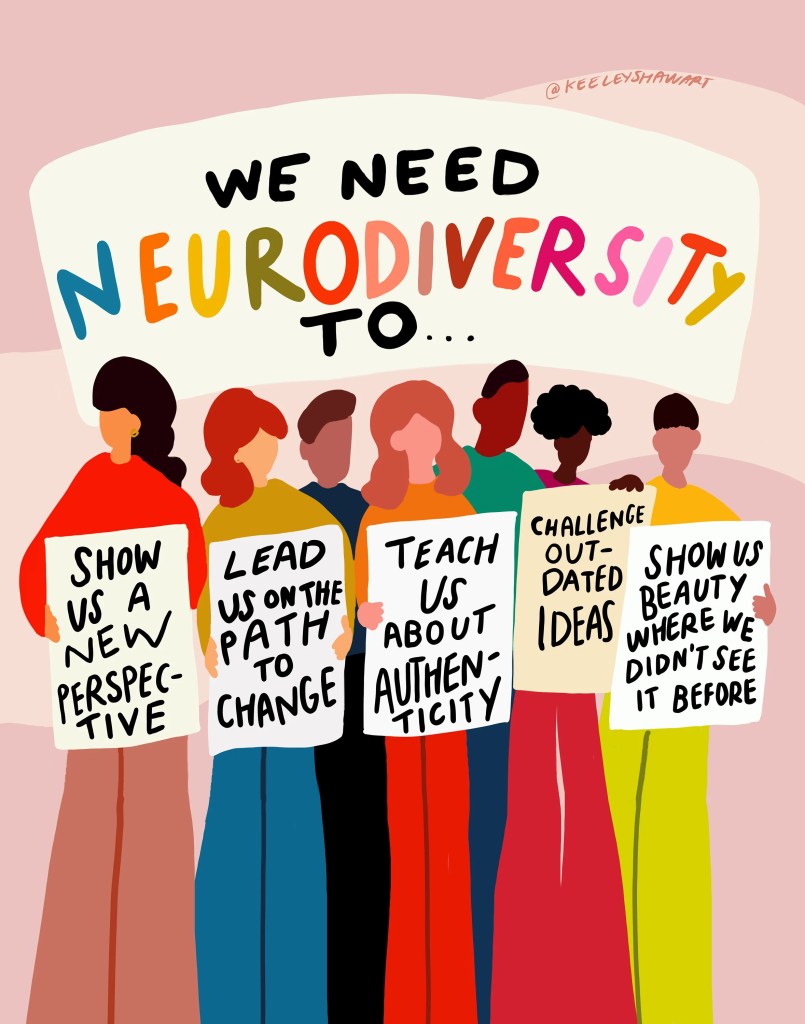
As the month comes to an end, so does the celebration of Neurodiversity Awareness Month. I do hope that by my posts, I have tried to create a sense of empathy and awareness for these people. If you did love them and would want me to write more on this topic every year, do tell me in the comments section. I would be happy to bring on board more on this topic by exploring different mediums.
Since its the end of the series, I decided to finish it with a bang. And this I chose to do by finding such people in the world of literature. The world of literature always talks about normal people like you and me. But there have also been instances where it has spoken about fantastic depictions of people who are now identified as neurodivergent in psychological terms. So, lets try to explore them.
Representation of neurodivergence over time
The history of literature contains many characters that show features which resemble these special group of people. They might have been termed as “odd”, “eccentric” or “difficult”. However, what people might have not understood that their brains functioned differently. And this can be attributed to the fact that there was lack of awareness in this field.
Take for example, Jane Eyre’s friend Helen Burns from Charlotte Bronte’s novel of the same name. She has an intense focus, sensory sensitivities, and difficulty with certain social expectations. This can be linked to traits displayed in autism. Or even our favourite detective of all times-Sherlock Holmes who possesses exceptional pattern recognition, and deep specialized knowledge, but has social difficulties. This too aligns with many autistic experiences; though Sir Arthur Conan Doyle never portrayed him as one.
These historical characters were never created as characters who possessed neurodivergent traits.Yet, they do provide some patterns of recognition and connection for readers with neurodivergence. Exploring these characters from a different lens shows us that these experiences have always been a part of humanity. It is just that we are becoming more aware and have developed a language to describe such experiences.
However, in recent years, there has been a deliberate representation of these people which continues to grow. For instance, Christopher Boone in Mark Haddon’s “The Curious Incident of the Dog in the Night-Time” (2003) marked a significant milestone. The reason was: a first-person narrative from an autistic perspective. It was also path-breaking as it helped solidify the fact that even neurodivergent protagonists can make great literary characters.
In today’s times, works like Helen Hoang’s “The Kiss Quotient” which has autistic protagonists or Eliza Frye’s “Jazzy Little Drops” which revolves around ADHD experiences continues to evolve the scene.This is because these works are themselves being written by neurodivergent authors; thus bringing an authentic outlook.
Neurodivergence in different genres
It is not only contemporary realistic fiction that has captured neurodivergence, other literary genres have done a great job as well.
In the field of mystery and fiction, characters with intense focus and pattern recognition have gained prominence. Apart from Sherlock Holmes, Lisbeth Salander from Steig Larsson’s Millenium Series too displays traits which resemble autism along with exceptional investigative skills.
Science fiction too has its share of neurodivergence. This is in the form of Elizabeth Moon’s “The Speed of Dark“. This explores autism in a near-future setting where “cures” become available. This thus, raises profound questions about identity and difference. Or Becky Chambers’ “The Long Way to a Small, Angry Planet” which normalises cognitive differences across species.
The genre of fantasy literature too hasn’t shied away from embracing it. R.F. Kuang’s “The Poppy War” has a protagonist whose hyperfocus and social differences read as potentially ADHD. However, the portrayal of the protagonist shows how these traits become advantages in certain contexts.
And if you are a lover of the romance genre, neurodivergence has made its presence felt here as well. Helen Hoang’s “The Kiss Quotient” and “The Bride Test” feature autistic protagonists navigating relationships.They also bring a nuanced understanding of sensory experiences and communication differences to the genre. Though a word of caution:such works can feel problematic to some.
Stereotypes that harm
Even though progress is being made in the space of neurodivergent literature, problems still persist. This is because many times a certain portrayal of a character makes it prone to stereotypes. This needs a critical examination.
Take the example of the “savant” stereotype. This was brought into the mainstream by the character of Rainman. Though it succeeded in bringing awareness about autism.But it also brought a misconception with it that all individuals with autism possess extraordinary mathematical or memory capabilities.
Or the portrayal of a neurodivergent individual as a burden. This is equally bothering as well. As such type of portrayal brings an imbalance between how experiences are viewed by neurotypical or neurodivergent people. This is highlighted in Jodi Picoult’s “House Rules” where in the mother of the protagonist creates a list of House rules as she devotes herself to the protagonist. The reason being the protagonist suffers from Asperger’s Syndrome.
And the most hurtful is the portrayal of a “deficit-only” portrayal, where neurodivergent characters are defined exclusively by their challenges. Such portrayals fail to acknowledge the strengths or show the complete personhood of that person. Also, it reinstates the fact that neurodivergence is limiting which is not the case.
Why do such portrayals matter or are harmful? This is because, for many readers who do not know such individuals on a personal level, literature shapes their understanding of neurodiversity. And when novels consistently present limited or harmful portrayals, they extend real-world stigma and misunderstanding.
Way ahead for neurodivergent literature:
As awareness grows, things look promising in the literature front of neurodivergence. Firstly, intersectionality is gaining crucial recognition. Works are exploring how neurodivergence intersects with race, gender, sexuality, and other aspects of identity. Akwaeke Emezi’s “Freshwater,” though focused primarily on spiritual experiences, incorporates neurodivergent perspectives within its Nigerian context.
Middle-grade and young adult literature is also becoming particularly rich with neurodivergent characters. This is offering younger readers the representation many older neurodivergent individuals lacked growing up. For instance, Elle McNicoll’s “A Kind of Spark” features an autistic protagonist advocating for memorial recognition of women persecuted as witches. This draws subtle parallels between historical misunderstanding of difference and contemporary autism acceptance.
Poetry and experimental forms are also becoming important mediums by which neurodivergent experiences are expressed. The fragmented structures in Ocean Vuong’s “On Earth We’re Briefly Gorgeous” mirror non-linear thinking patterns, while Ada Limón’s poetry often touches on experiences of anxiety and difference.
Conclusion:
Literature has the power to transport one into another person’s mind. Neurodivergent literature helps readers to experience processing systems that are different from normal brains.
As both writers and readers, we can advocate for authentic representation by supporting neurodivergent authors, approaching stereotypical portrayals critically, and celebrating works that capture the complexity of neurodivergent experiences. This helps create a world where cognitive diversity is recognized not as deviation but as an essential expression of humanity’s remarkable variation.
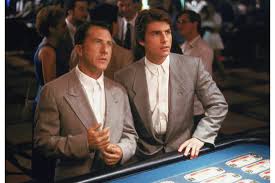
Starring: Dustin Hoffman, Tom Cruise, Valeria Golino, Gerald R Molen, Jack Murdock, Ralph Seymour
Directed By: Barry Levinson
Genre: Drama/Road
“Sometimes it is the people no one can imagine anything of who do the things no one can imagine.”
-Alan Turing
In today’s post, we cover a story of a person who is neurodivergent by nature but also responsible for instilling a sense of brotherhood and pride. The thing with neurodivergent people is that they do have the same needs and wants as that of a neurotypical human but they express their wants and needs in a slightly different manner which at times might be a bit challenging but with patience and time can be understood and be a person whom you can foster a great bond with.
This week’s pick remains a timeless classic that explores autism and family relationships.It is a movie which has garnered critical acclaim and is a four Academy award winner. If you have guessed it, maybe this can be your excuse to travel down the memory lane again and cherish the good moments. So, jump in .
Story line: RainMan is a story that revolves around a self-centered car dealer named Charlie Babbitt. He is in between a financial trouble when he learns about his father’s death. Seeing this as an opportunity, Charlie expects a substantial inheritance in his name. But he gets the shock of his life when he discovers that his father has left him only a classic convertible and some rose bushes while the rest of the proceeds are given to an unknown beneficiary. This leads him on an investigative trail.
His investigation leads him to WallBrook, where he meets Raymond, the older brother he never knew existed. Raymond is autistic by nature who possesses extraordinary mathematical abilities, has routine-based behaviours but faces significant social challenges. Charlie being hellbent on receiving his share of inheritance kidnaps Raymond from the institution.
But what begins as a cross-country road trip to fulfill his selfish motives slowly begins to turn into something meaningful. It transforms into a journey of slowing down and adapting along with a deep admiration and respect and a bond that evolves into a genuine brotherly connection. This journey transforms Charlie as a person as he discovers something more valuable than what he sought for-a genuine relationship with his brother and personal growth beyond his former self-centered existence.
Scrutiny: The movie tries to balance entertainment with a fine development of the character. It also tries to address complex themes with sensitivity. Like for instance, take the evolution of Charlie as a person. Initially, he is shown as a person who is self-centered and has only one priority- that is to get his share of inheritance. But after spending time with his brother, he undergoes a change wherein he starts caring for his brother in a genuine manner. This change is portrayed subtly by Tom Cruise.
Dustin Hoffman as Raynold impresses a lot as he delivers a performance which shows that a lot of research and empathy has been involved in the role. His character is a person who has his own fears, perspectives and choices which may not seem to similar as like other human beings, but gives a different perspective.It also tries to echo the sentiment that his thinking and way of living does not need any fixing even though it might be different.
It tries to raise awareness about autism in a period where awareness was less about this condition. Though a very small percentage of people are affected by from what Raymond is shown to portray, this has given rise to public misunderstanding about the condition. But, the film deserves credit for treating Raymond’s condition with dignity rather than portraying it as something to overcome or cure.
Also, the bond between the two brothers doesn’t develop suddenly but is a gradual development; as each with his own strengths try to develop a bonding. While Charlie’s transformation is more obvious, Raymond also shows subtle growth in his ability to adapt and connect with his brother.
The visual language used by the director also conveys the emotional journey of the brothers beautifully. What begins as a life in a fast paced city slows down to portray Raymond’s deliberate, routine-focused approach to life .
Sentiment: The movie navigates through a difficult emotional journey masterfully without any manipulation or a lot of sentimentality. It showcases a journey from frustration to acceptance, from lack of vulnerability to that of connection. It also has the ability to find moments of unexpected joy amid the challenges. This provides an emotional relief along with deepening our investment in the brothers’ journey. The movie also reminds us that meaningful relationships are often formed through shared moments of simple pleasure rather than grand gestures. It also reminds us of the fact that an acknowledgment of love sometimes means accepting limitations while still maintaining connection. A culturally significant piece of work which played an important role in starting conversations about neurodiversity.It also highlights the fact of how relationships can form across seemingly insurmountable differences. And we need not change ourselves as a person to accept one another but instead just embrace the differences one has in a positive manner.
Cite Bite: “There is a thin line that separates family and strangers. In the end, it’s the bonds we choose to nurture that define us.”
Que: What amount of money does Charlie’ s father leave?
Welcome to The Expression Hub! I’m Roshani, who loves to express herself through the medium of writing. This blog is my little corner of the internet where I dive deep into the world of movies, books, and web series—reviewing, analyzing, and sometimes just ranting about the stories that make us laugh, cry, and question everything.
Beyond reviews, you’ll also find my personal musings—random thoughts, life reflections, and the occasional deep dive into the things that inspire me. Think of this as a space where art meets emotion, and where honest opinions matter more than star ratings.
Join me as we explore incredible stories together, one post at a time. Have a recommendation? Let’s talk—I’m always up for discovering something new!


 The Expression Hub