• Starring: Adivi Sesh, Saiee Manjrekar, Sobhita Dhulipala, Revathi, Prakash Raj, Murali Sharma

    Directed by: Sashi Kiran Tikka

    Genre: Biographical/ Action

    ” I think a hero is any person really intent on making this a better place for all people.”

    -Maya Angelou

    There are films that entertain. There are films that inspire. And then there are films that make you sit in silence long after the credits roll. It fills your throat with a lump in the throat and a sense of gratitude for the same. After all, guarding your nation with your life is not an easy task.

    Not every hero wears a cape. Some wear a uniform. But amongst those there are very few that have a unshakeable sense of purpose. A purpose so unshakeable that no bullet, no terrorist, and no amount of darkness can ever extinguish.A man whose name you may have heard in passing. His full story-the love, the laughter, the losses, the last breath — very few truly know.That is exactly what this film set out to change.This week’s pick revolves around the story of one such hero. A hero who laid down his life during a terrorist attack that rattled the financial capital of the country. Who was he and why is his story a great one ? Read on to find out .

    Storyline: Major narrates the life story of Sandeep Unnikrishnan. From an early age, Sandeep was fascinated by the military. This spark was lit by when his father took him to a Navy ceremony as a young boy. He went on to join the Indian Army, rose through the ranks, and eventually became a trainer for the elite 51 Special Action Group of the National Security Guard (NSG).

    But here’s the thing about Sandeep’s journey that the film captures so honestly — it wasn’t a straight line. There were setbacks. There were moments of self-doubt. There were doors that shut before they opened. But Sandeep had this rare quality about him — he didn’t quit. Not because he was fearless, but because his love for what he did was simply bigger than any obstacle in his way.

    And that is the heart of this film. This movie tries to celebrate the man he was- a son, a husband, and above all — a human being who chose duty over everything.

    Scrutiny:What makes Major stand apart from the usual wave of patriotic biopics is its choice of focus. Rather than leading with a chest-thumping nationalist tone, the film asks a quieter, more profound question: Who was Sandeep Unnikrishnan, the person?

    If there is one reason to watch Major, it is Adivi Sesh. The actor, who also wrote the screenplay, doesn’t just perform — he transforms.

    The supporting cast deserves equal praise. Prakash Raj as K. Unnikrishnan is quietly devastating — a father who holds himself together while his heart breaks. Revathi as Dhanalakshmi brings a gentle warmth to every scene she’s in. Saiee Manjrekar as Isha — the woman who loved Sandeep deeply, perhaps without ever fully understanding the world he lived in — is both convincing and emotionally resonant.

    Director Sashi Kiran Tikka too demonstrates remarkable restraint throughout the film. He keeps the film grounded in character. The romance sequences in the first half feel genuinely youthful and sweet, while the tension-filled sequences inside the Taj in the second half are masterfully staged.

    The music by Sricharan Pakala elevates the film significantly. The background score during the action sequences is pulse-pounding, while the quieter emotional themes underscore the personal tragedy of the story with great sensitivity. Shot across 75+ locations in 120 days on a budget of ₹32 crores, the film punches well above its weight in terms of production value.

    Sentiment: In an era where biopics are churned out on an assembly line, often more interested in spectacle than substance, Major is a reminder of what the genre can be at its best. It humanises a hero at a time when we tend to either over-mythologise or forget those who sacrifice everything for us.

    Films like Major remind us that heroism is not one dramatic act — it is a lifetime of quiet choices.

    The film also forces us to reflect on the families left behind. The parents who watched the news and only then learned their son had run into a burning building. The wife who found out he never signed the divorce papers. These are the kinds of truths that no medal can ever fully honour.

    Verdict: Major is an emotionally rich, skillfully crafted biopic that succeeds where many others fail.

    It is imperfect in small ways, as most ambitious films are, but its heart is undeniably in the right place. This is a film that India needed, and one that Sandeep Unnikrishnan’s legacy richly deserves.

    Rating: ****

    Quote-Unquote:Sandeep should be remembered not for how he died, but for how he lived.” (Sandeep’s father while addressing a commemoration)
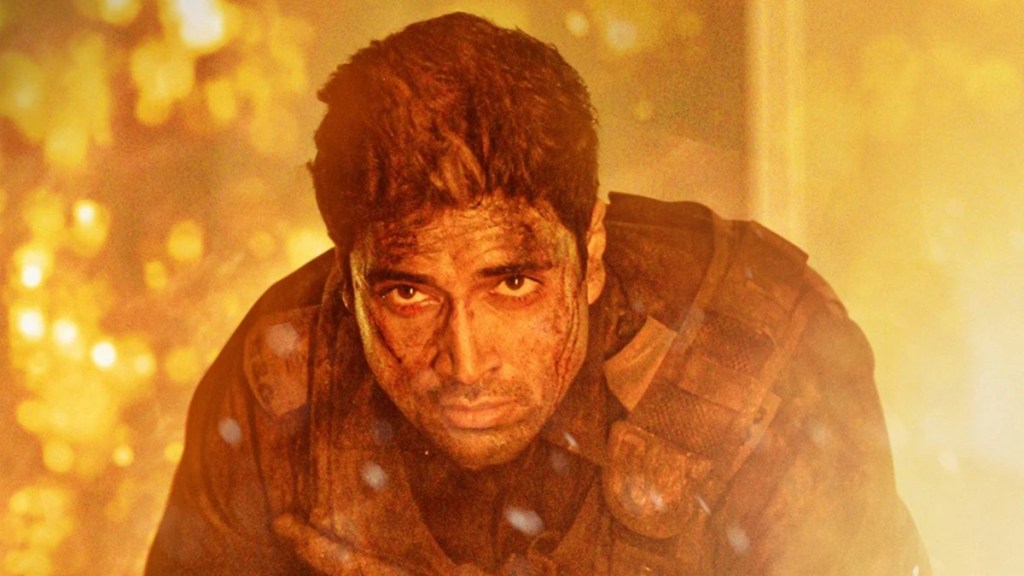
    Que : Name the bus stand where Isha meets Sandeep.

    a. Hampi

    b. Udupi

    c. Gokarna

    d. Kalasipalya

    Share This Story — Because Some Heroes Deserve to Never Be Forgotten

    If this post moved you, if it reminded you of a story you want more people to know, please share it. Share it with your friends, your family, your colleagues — anyone who deserves to know the name Major Sandeep Unnikrishnan.

    Use the buttons below or simply copy the link and send it to someone today. Because the best way to honour a hero is to make sure the world never stops talking about them.


    Did you watch Major? What scene hit you the hardest? Drop your thoughts in the comments below — I would love to hear from you. And if you have not then do give it a watch and then share what part of the movie appealed to you in the comments section.
    Continue reading →: Don’t come up I will handle them
  • “We loved with a love that was more than love.”

    — Edgar Allan Poe, Annabel Lee

    We have always had the feeling believing that love is the answer. After all movies have always portrayed the happy ending which has ended with a kiss. Or songs have swelled at the declaration . And for a fleeting moment it does feel true as well- the fact that  love alone is enough to sustain two people through a lifetime. But is it? Ask anyone who has watched a deeply loving relationship quietly crumble, and the honest answer will give you pause.

    Love is not nothing. It is in fact the essential beginning. But beginnings are not endings. What carries a relationship from the heady early days into something lasting, resilient, and genuinely fulfilling is a far more complex architecture than a single emotion.

    The illusion at the heart of romance

    Literature, though celebrates passion but has also acted as a reminder to the same.  In Leo Tolstoy’s Anna Karenina, Anna and Vronsky share a love that is undeniable . They make sacrifices for the relationship. Yet, without trust, shared purpose, or the infrastructure of daily respect, their love collapses inward under its own weight. It was not that Tolstoy was against the idea of love. He was just writing against the delusion that passion is a substitute for partnership.

    A similar example is seen in Emily Bronte’s Wuthering Heights.  Heathcliff and Catherine’s love is raw, spiritual and unrelenting. And yet their relationship is defined by cruelty, obsession, and destruction. The love was real. The relationship was ruinous. The distinction matters enormously.

    What studies show

    Psychologist John Gottman spent four decades studying couples.His research at the University of Washington identified the predictors of what made a relationship a failure. He called them the Four Horsemen. They are contempt, criticism, defensiveness, and stonewalling . Ironically, none of these are about love. What differentiated lasting couples lasting couples was not the presence of love but the presence of repair . Could they acknowledge ruptures, take responsibility, and return to one another after conflict?

    Love , does not automatically produce the skills a relationship needs. It does not teach a person to listen without defending. It does not dissolve entrenched resentments. It does not align two people on how to raise children, handle money, or face grief. These require intention, communication, and often, hard work that no amount of romantic feeling can shortcut.

    Real lessons from real people

    Barack and Michelle Obama have always been an example of an ideal couple in the public life. But is it the truth? Both have faced periods of difficulty in their marriage. They have also taken couple therapy for the same. Yet, their relationship endures not because it is effortless but because they have consistently invested in it. They have spoken about shared values, mutual respect, and the deliberate choice to remain partners. Michelle Obama famously said she couldn’t stand her husband for ten years — and that love was not always a feeling, but a choice.

    Another classic example which by Hollywood standards is gold, is that of Paul Newman and Joanne Woodward. Until Newman’s death in 2008, their marriage lasted. Both attributed the longetivity to respect, shared creative interest, and a genuine friendship that underlay the romance.That excitement was rooted in admiration — which is different from, and deeper than, initial attraction.

    What are the pillars that build lasting relationships?

    If love is the foundation, what are the walls? Research and lived experience suggest several factors that consistently distinguish lasting relationships from those that fade or fracture.

    Trust is the silent architecture of every healthy relationship. It is built not through grand gestures but through daily consistency. This involves  saying what you mean, being where you said you would be, handling someone’s vulnerabilities with care.  F. Scott Fitzgerald captured its absence hauntingly in The Great Gatsby. Jay Gatsby loves Daisy with extraordinary devotion. But their relationship has no truth in it . Without trust, love haunts.

    Respect is love’s daily expression. It shows up in how partners speak to each other when no one is watching.  Many couples who fall out of love report that what actually eroded first was not the feeling but the regard.

    Shared meaning — a sense of common purpose, aligned values, or simply a shared vision of life — provides the connective tissue that keeps two people moving in the same direction. Viktor Frankl in his Man’s Search for Meaning, observed that love is not merely an emotion but a direction of attention. When couples lose a shared direction, love can become a feeling in a vacuum.

    Commitment as a practice-is what gets tested during the ordinary difficult stretches that every long relationship encounters. 

    “Love is not breathlessness, it is not excitement… it is not the desire to mate every second minute of the day… that is just being ‘in love’, which any fool can do.”

    — Louis de Bernières, Captain Corelli’s Mandolin

    So-is only love enough?

    Love is necessary, but it is not sufficient. It is the seed, not the garden. It is the reason you begin — not the reason you endure. What endures is everything love motivates you to build: honesty, friendship, flexibility, forgiveness, and the daily decision to see another person clearly and choose them anyway.

    Relationships that last are not those in which people never stop feeling love. They are those in which people never stop practicing it — as a verb, not a noun. As something done, not merely felt.

    In Jane Austen’s Pride and Prejudice, Elizabeth Bennet and Mr. Darcy reach love only after dismantling their own pride and prejudice .Their romance is hard-won because it is honestly won. What Austen knew, and what every lasting couple eventually discovers, is that the love worth having is not the love that falls on you like weather. It is the love you build — carefully, imperfectly, and with intention.

    Reflect. Reconnect. Grow Together.

    If this piece resonated with you, consider sharing it with someone you love — or someone navigating love right now. You might also explore my other pieces of work by subscribing to my newsletter.

    Also, if you loved the article, you can share the same on the social media out there. Also, if you have any suggestions for the same, you can do the same by writing it here. Would be happy to hear the same.

    Continue reading →: Is love enough? What Really Keeps Two People Together
  • One of the oldest tensions in the human civilization which we haven’t found answers yet

    You are given an opportunity in life. A shortcut, a deal, a silence you could keep and two voices begin. One talks about numbers while others speak in something that is harder to name. Something that sits in the chest rather than the wallet. This is one of the oldest negotiations one has faced in the human history. And the older we get, the louder the voices become.

    This problem is not modern. Ancient philosophers grappled with it . Religious traditions built entire frameworks around it . And yet we are still standing at the same crossroads- only now the dilemmas are faster, at high stakes and more publicly visible than before. The news channel delivers a fresh case study every week.

    Why the conflict arises or exists?

    Money is a form of stored energy. It acts as a claim on the future and a language of exchange . But it is a tool that interacts with every aspect of being human- including our sense of right and wrong. When financial pressure intensifies, our moral reasoning undergoes a tough test.

    In psychology, it is known as moral disengagement- the gradual process by which financial necessity rewrites what we consider acceptable. It is more like cognitive architecture bending under load. The mind is skilled at finding reasons why this particular compromise is different, justified, temporary.

    Oscar Wilde once wrote, ” A man knows the price of everything and the value of nothing.” The price knower is not villainous in nature . They are simply using one currency while ignoring other.

    In real life, the moral dilemma is at a different level. An employee sees something wrong and weighs against job security. Or a small business owner has to make a choice between sustainable sourcing and competitive pricing. Alternatively, a professional who takes on a client whose values differ from their own because the rent is due.

    As per a global survey, 73% of workers said that they had witnessed decisions which were questionable ethically but stayed quiet.

    Should money win ? The cost of compromise

    No corporate scandal illustrates the morals vs money collapse than that of Enron.  In the late 1990s, Enron was celebrated as one of America’s most innovative companies. Its executives were wealthy, decorated, and admired. Yet behind the headlines, a systematic culture of financial fraud was being engineered. Executives were manipulating accounting rules,hiding losses in shell companies, and cheerfully cashing out stock options while ordinary employees’ retirement savings were wiped out. The argument, internally, was always financial: the numbers had to be hit. The moral voice, it seems, had been budgeted out.

    The Volkswagen emissions scandal of 2015 offers a similarly instructive lesson. Engineers at one of the world’s most respected automakers designed software specifically to cheat diesel emissions tests. The motivation was not ideology. It was market pressure. Executives wanted fuel efficiency and performance without the cost of genuinely clean technology. The eventual cost — over $30 billion in fines, settlements, and recalls — dwarfed whatever was saved.

    Purdue Pharma, owned by the Sackler family, aggressively marketed OxyContin as a low-addiction painkiller. But the resulting opioid crisis claimed over 500,000 American lives between 1999 and 2019. The family’s net worth, at its peak, exceeded $13 billion. However, price paid by communities across America was incalculably higher.

    When morals win- An act of courage

    In 2002, Sherron Watkins, a vice president at Enron, wrote an internal memo to CEO Ken Lay . She warned that the company’s accounting irregularities could lead to implosion. She was a senior employee who stood to benefit from staying quiet. She chose not to. Her whistleblowing, at significant personal and professional risk, became central to the subsequent congressional investigation. She was later named one of Time magazine’s Persons of the Year.

    A quieter but equally instructive example comes from Patagonia, the outdoor clothing brand. In 2022, founder Yvon Chouinard transferred ownership of the entire company — valued at roughly $3 billion — to a trust and non-profit organization dedicated to fighting the environmental crisis.”Earth is now our only shareholder,” the company announced. The financial sacrifice was enormous. The moral statement was unambiguous.

    The false narrative we inherit

    Popular culture has long framed this as a binary- you are either moral and poor, or wealthy and corrupt.This framing is not just simplistic — it is actively harmful. This is because it trains us to see financial success as morally suspicious and moral integrity as financially naive.

    Consider Warren Buffett, who has spent decades arguing that his tax rate — as a billionaire — should not be lower than that of his secretary. He has pledged to give away 99% of his wealth to charity and has lived for decades in the same modest Omaha home he bought in 1958. His moral compass did not prevent him from becoming enormously wealthy. In many ways, it contributed to it: a reputation for honesty made him someone people trusted with their money for generations.

    Contrast this with Elizabeth Holmes of Theranos, who raised $900 million from investors by claiming her company could run hundreds of medical tests from a single drop of blood. This was however, a technology that never worked. Holmes, who was convicted of fraud in 2022, is a textbook example of financial ambition severed entirely from moral constraint.  The eventual collapse destroyed not just her company, but the trust of patients who had made real medical decisions based on false test results.

    Where the actual battle is lost

    Most moral failures do not begin with a dramatic decision. They begin with what researchers call “ethical fading” — the gradual erosion of moral awareness as financial pressures become normalized. 

    The Wells Fargo fake accounts scandal is a perfect example: between 2002 and 2016, bank employees opened millions of unauthorized customer accounts to meet aggressive sales targets.

    The reverse is also true. Johnson & Johnson’s response to the 1982 Tylenol poisonings remains one of the most studied examples of moral decision-making under financial pressure. When seven people in Chicago died after ingesting cyanide-laced Tylenol capsules, J&J immediately recalled 31 million bottles — at a cost of $100 million — before anyone legally required them to. Their CEO, James Burke, prioritized consumer safety over quarterly results. The stock dropped. Then it recovered. Then the brand earned a level of trust that competitors could not buy. Long-term, the moral choice proved to be the financially intelligent one.

    The above case studies show that integrity is not primarily constructed in moments of dramatic refusal. It is built slowly, in smaller choices most people do not see.

    Can morals and profit coexist?

    If the business is done with a certain intention, then the answer is a resounding yes. The businesses that survive generational transitions are almost uniform ones that treated their values as load-bearing rather than decorative. A classic example of the same is the Tata Group- a conglomerate that has operated for over 150 years, while maintaining a reputation for ethical conduct that competitors have consistently failed to replicate. The company’s profits, structurally, flow back into public good.

    On a more individual scale, consider Aaron Feuerstein, the owner of Malden Mills in Massachusetts, whose factory burned down in 1995. Rather than take the insurance payout and move manufacturing offshore — as many owners would have — Feuerstein continued paying his 3,000 employees their full salaries and benefits for three months while the factory was rebuilt. It cost him millions. It may have eventually cost him the company, which later entered bankruptcy. But his workers rebuilt with him, and his name became synonymous with what moral leadership looks like when it is most expensive.

    The goal is not to be the richest person in the room. The goal is to be someone the room trusts when something is at stake. Money and morals are not naturally opposed. What opposes them is short-termism — the belief that the next quarter, the next deal, the next salary negotiation is the whole game. When the horizon extends, the calculation changes. Integrity becomes not a cost, but an investment. The returns take longer. But they compound.

    The question that is worth asking

    There is no tidy resolution to offer here. The tension between what we value and what we are paid to do is real, structural, and ongoing. 

    The question worth sitting with is not “am I a good person?” That question is too abstract to be useful. The question is more specific: What am I willing to compromise, and what am I not? Written down, not just felt. Tested when the stakes are low, so the answer is available when they are not.

    Morals and money will keep negotiating with each other for as long as humans need to eat and also to sleep at night. The point is not to resolve the tension. The point is to know, clearly, which voice you are listening to — and to make that choice deliberately, every time.

    Every great moral decision in history started with one person willing to think differently. If you’re that kind of person — I want to hear from you. Not a newsletter, not a funnel. Just a real conversation. And if you have a similar story to share, I would be happy to hear from you. You can connect with me here. Also, if you have any feedback to give, you can connect with me. I would love to listen from you.

    If you did love the article, you can share the same with your peers and fellow members . And also, you can become a part of the community by joining me on my journey.

    Continue reading →: The Battle Between Conscience and Capital

I’m Roshani

Welcome to The Expression Hub! I’m Roshani, who loves to express herself through the medium of writing. This blog is my little corner of the internet where I dive deep into the world of movies, books, and web series—reviewing, analyzing, and sometimes just ranting about the stories that make us laugh, cry, and question everything.

Beyond reviews, you’ll also find my personal musings—random thoughts, life reflections, and the occasional deep dive into the things that inspire me. Think of this as a space where art meets emotion, and where honest opinions matter more than star ratings.

Join me as we explore incredible stories together, one post at a time. Have a recommendation? Let’s talk—I’m always up for discovering something new!

Let’s connect

Design a site like this with WordPress.com
Get started